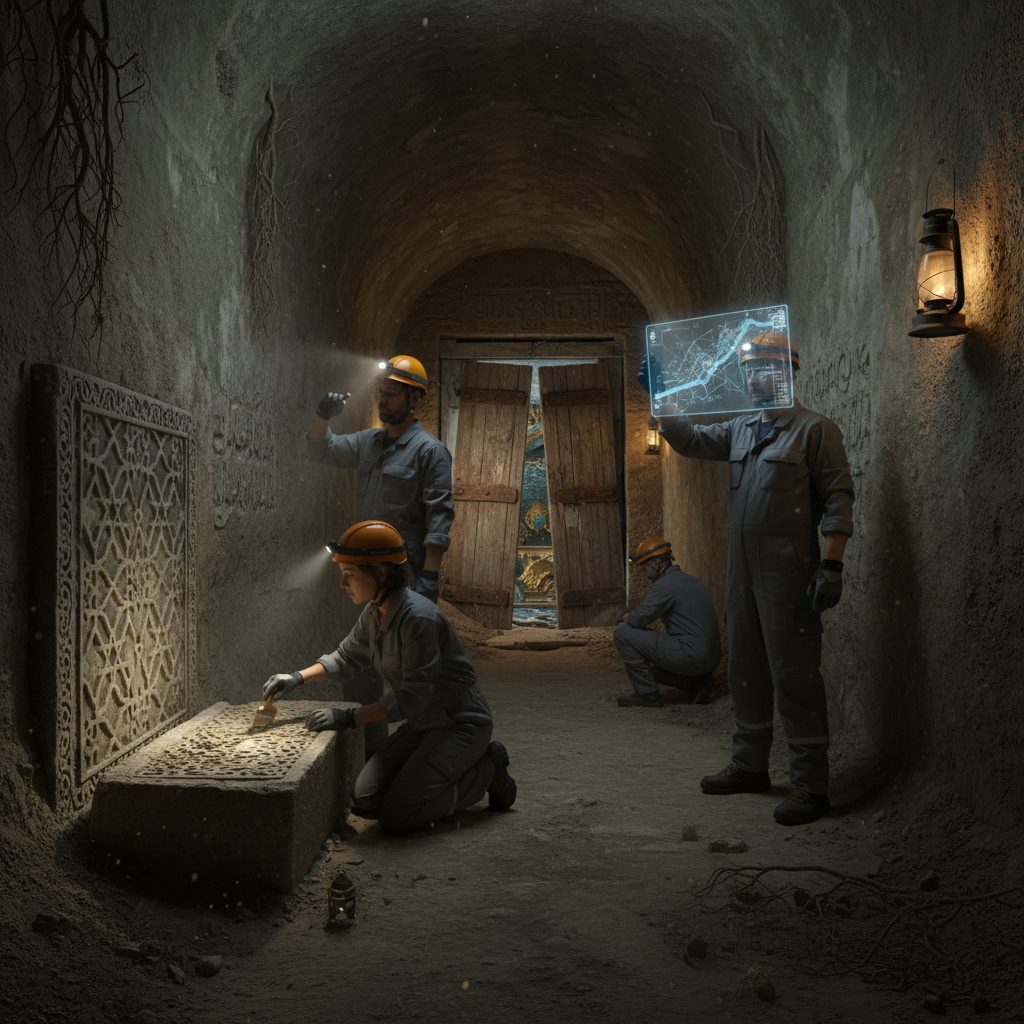
Eyüp Sultan Mosque's Underground Secrets: Mysterious Passages and Forgotten Vaults 2026
Discover the hidden depths of Istanbul's spiritual heart: the Eyüp Sultan Mosque. Beyond its revered prayer halls lie whispers of mysterious underground passages and forgotten vaults, holding centuries of untold stories and historical artifacts. This article delves into the legends and realities of Eyüp Sultan's subterranean world, offering a glimpse into its profound history and potential future archaeological revelations. Explore these fascinating secrets and learn why the mosque remains a site of immense spiritual and historical intrigue in 2026.
Eyüp Sultan Mosque's Underground Secrets
Located at the heart of Istanbul's spiritual center, the Eyüp Sultan district, the Eyüp Sultan Mosque is not just a place of worship, but also a unique structure that harbors deep history and many unknowns. The Eyüp Sultan Mosque's Underground Secrets point to legends whispered for centuries, mysteries awaiting discovery, and forgotten vaults carrying traces of the past. Even in 2026, our curiosity about what lies hidden beneath this sacred place remains alive. In this article, we will explore what is known and unknown about this mysterious structure.
A Brief History of Eyüp Sultan Mosque and Its Underground Passages
Eyüp Sultan Mosque was built by Fatih Sultan Mehmet in 1458, following the conquest of Istanbul. Constructed in this area after the discovery of Eyüp El-Ansari's tomb, the mosque quickly became one of the most important külliyes (Ottoman complex of buildings) of the Ottoman Empire. Although the mosque's architecture has undergone many changes, its basic structure and spiritual value have always been preserved. However, the Eyüp Sultan Mosque's underground secrets, located beneath the mosque, are generally brought to light through folk tales and limited studies conducted by researchers.
Fatih Sultan Mehmet and the Construction of the Eyüp Sultan Complex
When Fatih Sultan Mehmet conquered Istanbul, he greatly valued finding the tomb of Hazrat Eyüp El-Ansari. This discovery held significant strategic and spiritual importance. The immediate construction of a tomb and then a mosque in the area quickly transformed it into a center of faith. The complex was not limited to the mosque and tomb; it became one of the most comprehensive educational and worship complexes of its time, including madrasahs, Turkish baths, and other social structures.
First Clues to Underground Structures
As with many large structures built during the Ottoman period, rumors persist about underground tunnels and vaults beneath the Eyüp Sultan Mosque. These structures may have served various purposes, such as water channels, food storage, or even shelters during difficult times. Indeed, in large complexes, such hidden passages were a common feature. The Eyüp Sultan Mosque's underground secrets could very well reflect these traditional architectural approaches.
Legends, Rumors, and the Underground Secrets of Eyüp Sultan Mosque
Many legends about the underground tunnels and vaults of Eyüp Sultan Mosque are passed down through oral tradition. While these legends sometimes offer clues rooted in reality, at other times they can be purely products of imagination. Nevertheless, considering that every legend has a starting point, these stories should not be completely disregarded. Claims regarding secret passages beneath the mosque coming from under the city walls, hidden treasures, and even structures dating back to the Byzantine period are frequently voiced, adding to the allure of the Eyüp Sultan Mosque's underground secrets.
Connections with the Byzantine Period
The Eyüp Sultan area was a settlement even before the conquest of Istanbul. Therefore, it is probable that remnants of Byzantine-era structures were encountered during and before the mosque's construction. According to some rumors, the underground tunnels of Eyüp Sultan Mosque might connect to old passages from the Byzantine period. These tunnels are believed to have provided secure passage to imperial palaces or outside the city during that era. Such connections make the Eyüp Sultan Mosque's underground secrets even more intriguing. For further context on historical excavations, you can explore resources from the Archaeological Institute of America.
Lost Vaults and Hidden Chambers
During past repair and restoration works, stories abound about discovering voids or hidden compartments at different points of the mosque. The purpose of these vaults and what they contained remains a complete mystery. Some believe these vaults housed important manuscripts or valuable artifacts, while others attribute more mystical meanings, perhaps even linking to the mosque's sacred relics. These lost vaults are a key part of the Eyüp Sultan Mosque's underground secrets.
Current Research and Techniques for Uncovering Underground Secrets in 2026
With technological advancements, research conducted beneath historical structures in 2026 has gained new dimensions. Instead of traditional excavation methods, less destructive and more precise techniques are now being employed. Advanced tools like Ground Penetrating Radar (GPR) and seismic methods can detect potential voids, tunnels, or different structural layers beneath the Eyüp Sultan Mosque, helping to reveal its underground secrets.
Ground Penetrating Radar (GPR) and Its Importance
- GPR sends electromagnetic waves into the ground and analyzes signals reflected from layers of different densities.
- This technology allows for mapping pipelines, old foundation remains, tunnels, or voids beneath the surface. For more on GPR applications, refer to Geophysical Survey Systems Inc. (GSSI).
- It is an ideal method for conducting underground research in a historical and sacred structure like Eyüp Sultan Mosque without causing damage.
- While no detailed GPR study has yet been publicly released, such techniques could play a critical role in illuminating the Eyüp Sultan Mosque's underground secrets.
Limitations of Archaeological Excavations and Alternative Solutions
Conducting large-scale archaeological excavations in an active and historically valuable area like Eyüp Sultan Mosque is both costly and poses a risk to the structure's integrity. Therefore, potential research areas should first be identified using remote sensing techniques, followed by more targeted, small-scale excavations. This approach is most suitable for both uncovering archaeological findings and preserving the fabric of this sacred place, while respecting the Eyüp Sultan Mosque's underground secrets.
Eyüp Sultan Mosque Underground Secrets and Future Projections
The mysteries lying beneath the Eyüp Sultan Mosque not only shed light on the past but also offer great potential for future tourism and cultural heritage research. As these secrets are uncovered, the historical value of the mosque and its surrounding complex will increase further, making it a distinct center of attraction for visitors, much like the millennia-old pilgrimages that characterize its history. The Eyüp Sultan Mosque's underground secrets hold immense promise.
Contribution to Cultural Heritage
If the Eyüp Sultan Mosque's underground secrets are brought to light, this will significantly contribute not only to Eyüp Sultan's but to all of Istanbul's cultural heritage. Every new piece of information uncovered could provide unique data on urban planning, architecture, and lifestyle during the Ottoman and Byzantine periods. Such discoveries have the potential to rewrite history books.
Tourism Potential
If explored underground structures are opened to visitors in a controlled manner, they could make Eyüp Sultan an even more popular international destination. Mysterious tunnels, ancient vaults, or Byzantine remnants could offer fascinating experiences for adventure-seeking tourists and history enthusiasts. However, such an opening must be done with great care, without damaging the structure and its historical fabric, ensuring the preservation of the Eyüp Sultan Mosque's underground secrets.
Eyüp Sultan Mosque and Spirituality: A Bridge from Past to Future
Eyüp Sultan Mosque has always been an important spiritual center since the conquest of Istanbul. The tomb of Hazrat Eyüp El-Ansari is a place of worship and pilgrimage that attracts millions of people every year. The Eyüp Sultan Mosque's underground secrets are also elements that deepen this spiritual atmosphere and stimulate the imagination of visitors, connecting them to oaths, loves, and farewells echoed in its historic stones.
Historical Importance of Eyüp Sultan
The Eyüp Sultan region was the army's headquarters during the conquest of Istanbul. Fatih Sultan Mehmet's initial focus on this area after the conquest demonstrates how strategically and religiously valuable Eyüp Sultan was. Life in the region has been shaped around this mosque and its surrounding complex for centuries. This deep-rooted history makes every detail regarding the underground structures, and thus the Eyüp Sultan Mosque's underground secrets, even more valuable.
Effect of Underground Secrets on Spiritual Perception
The belief in the existence of structures beneath Eyüp Sultan Mosque, which have not yet been fully explored, further strengthens the mystical atmosphere of the region. These secrets can increase visitors' devotion to the mosque and tomb and keep alive the hope of discovering truths hidden in the depths of history. In 2026, the unraveling of these mysteries will create great excitement, both scientifically and spiritually, as we delve deeper into the Eyüp Sultan Mosque's underground secrets.
In conclusion, the Eyüp Sultan Mosque's underground secrets are not just an architectural curiosity but also an important research area where bridges of history, culture, and faith converge. With detailed studies to be conducted in the future, the surfacing of every secret hidden in the depths of this ancient structure will enlighten us further.
Sıkça Sorulan Sorular
What are the "Eyüp Sultan Camii yeraltı sırları"?
The "Eyüp Sultan Camii yeraltı sırları" refer to the underground secrets, mysterious passages, and forgotten vaults believed to exist beneath the sacred Eyüp Sultan Mosque in Istanbul. These secrets are shrouded in legends and limited historical studies, captivating curiosity even in 2026 regarding what lies hidden beneath this historically significant site.
When was the Eyüp Sultan Mosque built?
The Eyüp Sultan Mosque was built by Fatih Sultan Mehmet in 1458, shortly after the conquest of Istanbul. Its construction followed the significant discovery of Eyüp El-Ansari's tomb, establishing the mosque as a crucial religious and cultural complex within the nascent Ottoman Empire.
What was the significance of Fatih Sultan Mehmet building the Eyüp Sultan Mosque?
Fatih Sultan Mehmet's decision to build the Eyüp Sultan Mosque and complex was strategically and spiritually significant. The discovery of Hazrat Eyüp El-Ansari's tomb was highly valued, and the immediate construction of the complex transformed the area into a major center of faith, education, and social activities, solidifying Ottoman presence in Istanbul.
What might be the purpose of the rumored underground structures beneath the Eyüp Sultan Mosque?
The rumored underground structures beneath the Eyüp Sultan Mosque, reflective of traditional Ottoman architectural practices for large complexes, might have served various purposes. These could include water channels for sanitation and supply, food storage to support the complex's inhabitants, or even shelters offering protection during times of conflict or emergency.