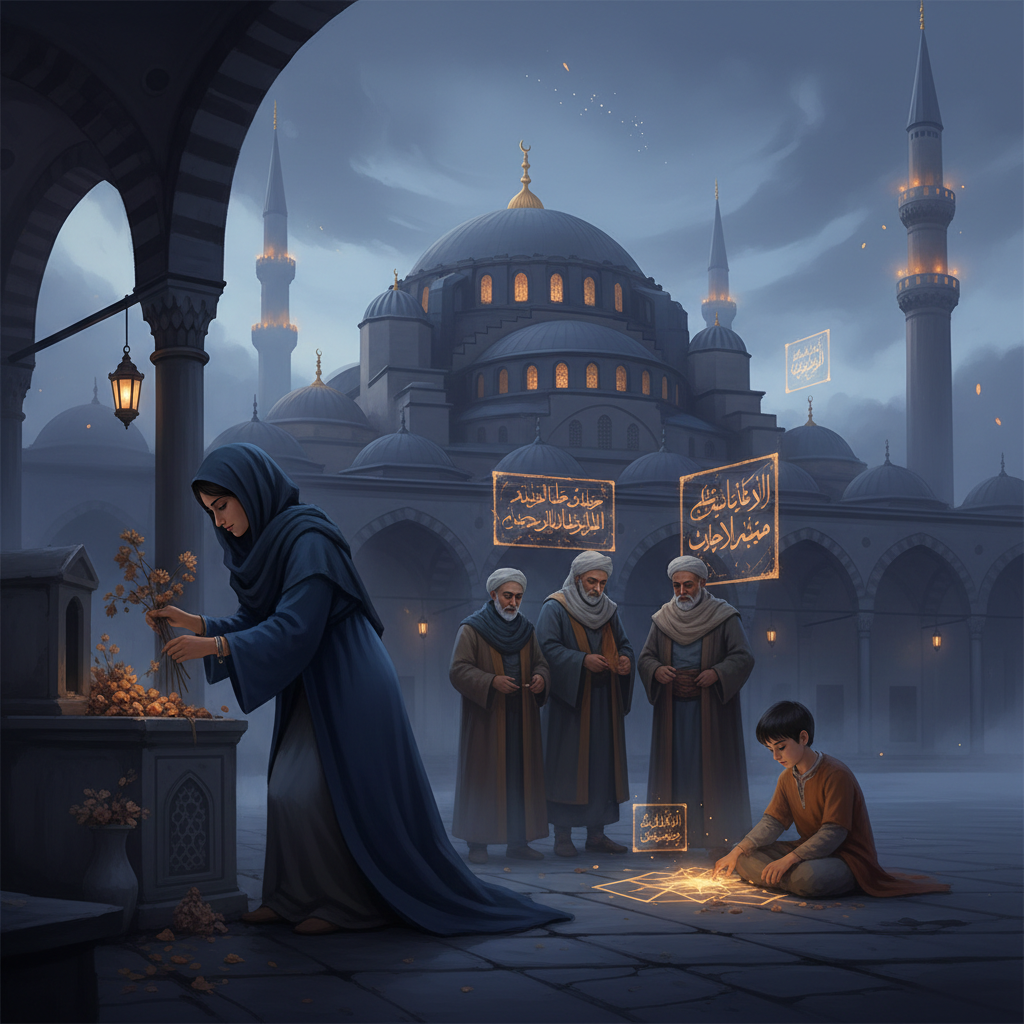
In the Shadows of Eyüp Sultan Mosque: Forgotten Rituals and Social Life in 2026
Rising in the heart of Istanbul, overlooking the tranquil waters of the Golden Horn, the Eyüp Sultan Mosque has, for centuries, been more than just a place of worship. It harbors a rich cultural fabric and Eyüp Sultan Mosque social life that has shaped around it. Even in 2026, the legacy left behind by this sacred place continues to impact the present day.
Eyüp Sultan Mosque and Community Life: A Timeless Legacy
Rising in the heart of Istanbul, overlooking the tranquil waters of the Golden Horn, the Eyüp Sultan Mosque has, for centuries, been more than just a place of worship; it harbors a rich cultural fabric and Eyüp Sultan Mosque social life that has shaped around it. This article explores the enduring significance of Eyüp Sultan Mosque and Community Life, examining its historical impact and its vibrant presence even in 2026. With its architecture, historical figures, and spiritual atmosphere, Eyüp Sultan Mosque offers visitors a profound experience, deeply intertwined with the community that thrives around it.
Eyüp Sultan Mosque: From Past to Present Landscape
Eyüp Sultan Mosque was built immediately after Sultan Mehmed the Conqueror's conquest of Istanbul, over the tomb of Eyüp Sultan Hazretleri. This proves that from its foundation, the mosque was not only a religious but also a political and cultural center shaped by the spirit of conquest. Throughout centuries, it received great attention from the Ottoman Sultans, acquiring its present magnificent structure through various additions and restorations. The mosque's role in Eyüp Sultan Mosque and Community Life has remained central throughout these transformations.
An Architectural Masterpiece: Eyüp Sultan Mosque
The mosque is a typical example reflecting the elegance and grandeur of Ottoman architecture. The courtyard, which greets you as soon as you step through the main gate, mesmerizes with the chirping of birds and the shade of centuries-old plane trees. While the main prayer hall reaches towards the sky with its dome and minarets, the interior's tile work, examples of calligraphy, and wood carvings transport visitors to a different world. Every corner of the mosque holds a distinct meaning and aesthetic. For a deeper dive into its construction, explore Eyüp Sultan Mosque: Stories Carved in Stone – A Look from 2026.
Eyüp Sultan Mosque incorporates the fundamental elements of classical Ottoman architecture, while also evolving with periodic additions. Especially in the 18th century, during the reign of Selim III, it underwent extensive renovation, thus reaching a capacity to serve larger congregations. The uniqueness of the structure comes from its integration with the fountains in its courtyard, the tomb structure, and surrounding buildings like madrasahs and imarets, all contributing to the rich tapestry of Eyüp Sultan Mosque and Community Life.
Center of Eyüp Sultan Mosque Social Life: Rituals and Traditions
Eyüp Sultan Mosque has been the most important focal point of social life from past to present. During religious holidays, special nights, and Friday prayers, the mosque courtyard overflows with thousands of people. This intensity showcases a unique tableau formed by people who gather not only for worship but also for socializing, helping each other, and cultural interaction. This vibrant aspect is a core component of Eyüp Sultan Mosque and Community Life.
Reflections from Forgotten Rituals to the Present Day
- Sakal-ı Şerif (Holy Beard) Visits: During special days of Ramadan, especially on the Night of Power (Kadir Gecesi), the opening of the Holy Beard for visitation in the mosque is an important ritual that has continued for centuries. These visits are moments when religious feelings intensify, and spiritual peace is sought, strengthening the bonds within the Eyüp Sultan Mosque and Community Life.
- Sword-Girding Ceremonies: During the ascension to the throne of Ottoman Sultans, sword-girding ceremonies were held at Eyüp Sultan Mosque. This ritual was an important practice that reinforced the Sultan's religious and political legitimacy and was performed for the continuation of the state. Although such a practice does not exist today, it holds an important place in historical sources. For more on these historical figures, see Eyüp Sultan Mosque and Its Mysterious Figures: Embark on a Discovery in 2026.
- Charity Lokma (Sweet Fritter) Distribution: Especially on holy nights and Fridays, the tradition of distributing charity lokma or other foods around the mosque is an important element that strengthens the feelings of solidarity and sharing in society, highlighting the communal spirit of Eyüp Sultan Mosque and Community Life.
As we reach 2026, even though some rituals may have lost their former splendor, the place and impact of the Eyüp Sultan Mosque in social life are still strong. Especially on weekends and religious holidays, local and foreign visitors flocking to the mosque continue to be a part of this unique atmosphere. Historical accounts often detail these customs, as seen on resources like Islamic Landmarks. This continuous engagement defines Eyüp Sultan Mosque and Community Life.
Eyüp Sultan Mosque and the Traces of Spirituality
Eyüp Sultan Mosque is not just a physical structure; it also harbors a deep spiritual atmosphere. The mosque and tomb offer visitors a peace and serenity that comes from the depths of history. The tomb of Eyüp Sultan Hazretleri is an important pilgrimage site in the Islamic world and is considered a sacred place where prayers and wishes are believed to be accepted, profoundly influencing Eyüp Sultan Mosque and Community Life.
Eyüp Sultan Hazretleri and His Place in the Islamic World
Abu Ayyub al-Ansari (Eyüp Sultan), as the standard-bearer and host of Prophet Muhammad, holds an distinguished place in Islamic history. The tomb of Eyüp Sultan Hazretleri, who was martyred during the first siege of Istanbul, carries great spiritual value for Muslims. This spiritual value forms the basis of the Eyüp Sultan Mosque social life and raises the mosque beyond merely a place of worship. The enduring reverence for Eyüp Sultan Hazretleri is a cornerstone of Eyüp Sultan Mosque and Community Life.
Visitors gather around the tomb to pray, recite the Quran, and experience a spiritual journey. This makes Eyüp Sultan an important center of attraction for Muslims from all corners of Anatolia and even around the world. With this spiritual atmosphere, the mosque serves as a haven where people find spiritual tranquility and inner peace. Additional details about his life can be found on reputable historical sites like TDV İslâm Ansiklopedisi (in Turkish, but highly respected for historical accuracy).
Eyüp Sultan Mosque's Socio-Cultural Interaction in 2026
Today, the area around the Eyüp Sultan Mosque has a unique socio-cultural structure where traditional and modern elements blend. While the traces of the past are felt in every corner, the markets, cafes, and social areas around the mosque reflect the dynamism brought by modern life. This transforms the mosque from merely a place of worship into an important center for tourism and cultural interaction, enriching Eyüp Sultan Mosque and Community Life. You can learn more about its past and present by exploring Eyüp Sultan Mosque: Its History and Architectural Secrets.
A Meeting Point on the Shores of the Golden Horn
Eyüp Sultan's location overlooking the Golden Horn makes it a unique meeting point for both locals and tourists. The slope descending from Pierre Loti Hill towards Eyüpsultan offers a wonderful opportunity to collect unforgettable memories accompanied by the magnificent Istanbul view. The area is ideal for photography enthusiasts, history buffs, and those seeking a peaceful day, all contributing to the vibrant Eyüp Sultan Mosque and Community Life.
The walking paths along the Golden Horn, bicycle trails, and excursions with historical boats are just a few of the privileges offered by Eyüp Sultan. In 2026, with increasing environmental regulations, this area will continue to be one of Istanbul's most popular social and cultural spaces. Especially the events and festivals organized in the summer months further enrich the Eyüp Sultan Mosque social life. For travel planning, tourist sites like Istanbul Tourist Pass provide useful information.
The Future and Legacy of Eyüp Sultan Mosque
Eyüp Sultan Mosque continues to preserve its rich legacy, forged over centuries, in 2026. It is certain that in the future, this sacred place will continue to exist as one of Istanbul's most important symbols, both religiously and culturally. Restoration works and awareness-raising activities play a significant role in transmitting this legacy to future generations, ensuring the continuity of Eyüp Sultan Mosque and Community Life.
Eyüp Sultan in a Digitalized World
In 2026, a time of rapidly increasing digitalization, the promotion of Eyüp Sultan Mosque and its surroundings is intensively carried out through these platforms. Through virtual tours, documentaries, and social media shares, the historical and spiritual value of the mosque is conveyed to broader audiences worldwide. This emphasizes the mosque's global importance and the richness of the Eyüp Sultan Mosque social life, connecting Eyüp Sultan Mosque and Community Life with a global audience.
In conclusion, Eyüp Sultan Mosque is not only a place of worship but also a vibrant center that embodies Istanbul's history, culture, and spirituality. This bridge stretching from the past to the present will continue to bring people together, inspire them, and keep the spirit of Istanbul alive in 2026. Visiting the mosque means not just seeing a place, but also witnessing a story spanning thousands of years, deeply rooted in Eyüp Sultan Mosque and Community Life.
Sıkça Sorulan Sorular
What is the historical significance of the Eyüp Sultan Mosque?
The Eyüp Sultan Mosque, built shortly after Istanbul's conquest by Sultan Mehmed the Conqueror, stands over the tomb of Eyüp Sultan Hazretleri. From its inception, it served as a crucial religious, political, and cultural hub, profoundly shaped by the spirit of the conquest. Throughout centuries, it received significant imperial attention and underwent numerous additions and restorations, evolving into the magnificent structure we see today in 2026.
What are the key architectural features of the Eyüp Sultan Mosque?
The Eyüp Sultan Mosque is a prime example of Ottoman architectural elegance. Its main gate opens to a serene courtyard shaded by ancient plane trees. The main prayer hall features a grand dome and minarets, while its interior is adorned with exquisite tile work, calligraphy, and wood carvings. The mosque's design integrates classical elements with periodic additions, including significant 18th-century renovations under Selim III, and is uniquely combined with courtyard fountains, the tomb, madrasahs, and imarets.
How does the Eyüp Sultan Mosque contribute to social life in 2026?
Even in 2026, the Eyüp Sultan Mosque remains a vital center for social life. During religious holidays, special nights, and Friday prayers, its courtyard becomes a vibrant gathering place for thousands. Beyond worship, it fosters a unique environment for socializing, mutual support, and cultural interaction, illustrating the enduring significance of its community-centric role.
What forgotten rituals are mentioned in connection with Eyüp Sultan Mosque?
The text mentions the 'Sakal-ı Şerif (Holy Beard) Visits' as an important ritual. This practice involves the ceremonial opening of the Holy Beard for visitation within the mosque, particularly on special Ramadan days, such as the Night of Power (Kadir Gecesi). This highlights a specific tradition that connects the mosque's spiritual heritage to its community.