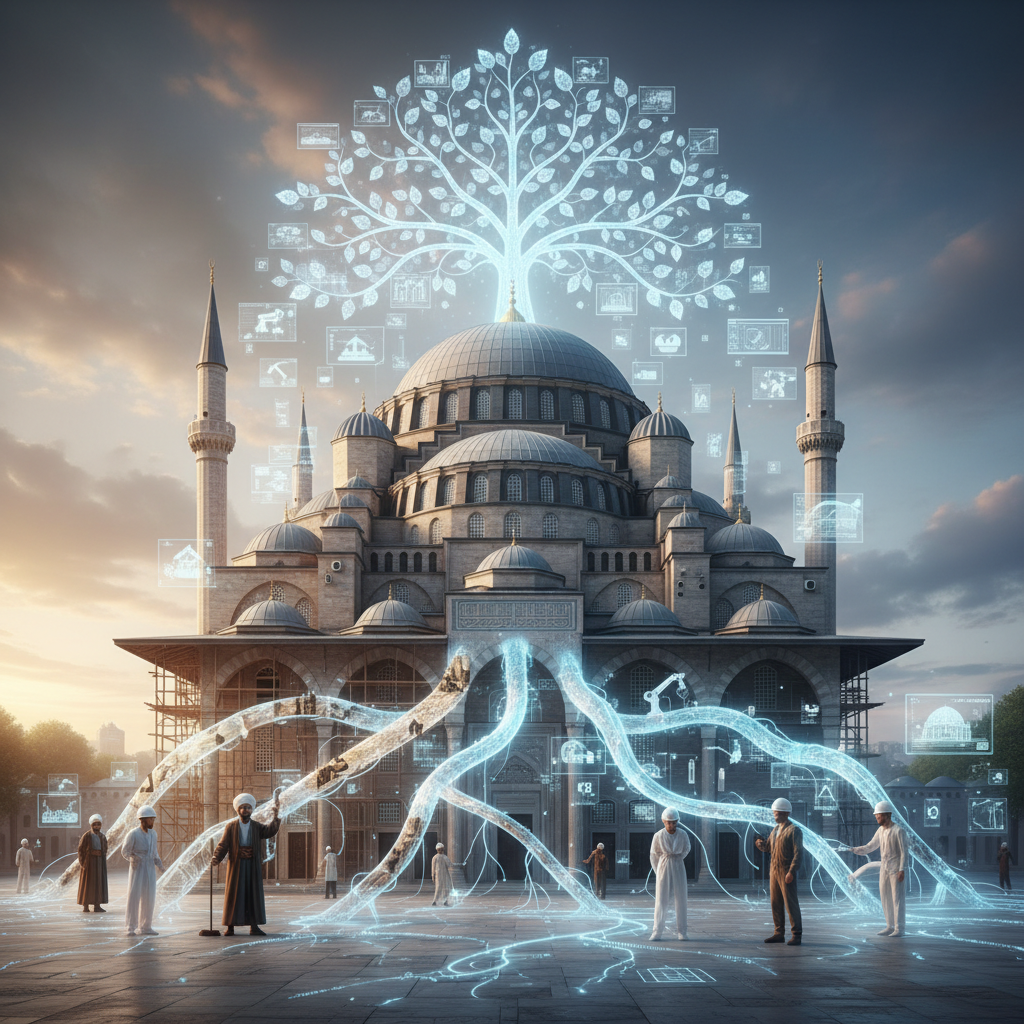
Eyüp Sultan Mosque's Centuries-Spanning Transformation: Restorations and Preservation Efforts Through a 2026 Lens
Eyüp Sultan Mosque, a spiritual cornerstone of Istanbul, has undergone numerous repairs and renovations throughout its long history. In 2026, meticulous restoration work continues, ensuring this sacred site is diligently preserved and passed on to future generations. Learn about the comprehensive efforts safeguarding this significant Islamic landmark.
Eyüp Sultan Mosque Restoration: A Century-Spanning Transformation from a 2026 Perspective
Eyüp Sultan Mosque, the spiritual heart of Istanbul and one of the significant places of worship in the Islamic world, has been the scene of numerous repairs and renovations throughout history. Today, Eyüp Sultan Mosque restoration works are being carried out with great meticulousness to ensure this sacred space is passed on properly to future generations. As we reach 2026, we can evaluate the mosque's transformation from past to present and its conservation efforts with a clearer perspective.
The History and First Repairs of Eyüp Sultan Mosque
Eyüp Sultan Mosque was built by Sultan Mehmed the Conqueror after the conquest of Istanbul, over the tomb of Abu Ayyub al-Ansari. Construction of the mosque began in 1458 and was completed in a short time. As one of the first major structures of the Ottoman Empire, the mosque has been exposed to many natural disasters and wear and tear over time. Delve deeper into its inception and significance in Eyüp Sultan Mosque in 2026: A Cornerstone of Turkish and Ottoman History.
The first comprehensive Eyüp Sultan Mosque restoration efforts were carried out shortly after the mosque's foundation, in the 18th century during the reign of Selim III. During this period, the mosque was largely rebuilt and began to bear the traces of Ottoman Baroque architecture. These restorations largely shaped the current outlines of the mosque.
The Importance of Selim III Period Restorations
The restorations carried out during Selim III's reign were a critical turning point for the architectural identity of the Eyüp Sultan Mosque. A more ornate and detailed architectural understanding was adopted, differing from the original structure. These works not only involved physical repairs but also enhanced the aesthetic and artistic value of the mosque.
- Strengthening of the mosque's main dome.
- Reconstruction or repair of the minarets.
- Use of gold leaf and pen work in interior decorations.
- Addition of the Hünkar Kasrı (Sultan's Pavilion).
Recent Eyüp Sultan Mosque Restoration Processes
Eyüp Sultan Mosque has also undergone various repair and strengthening works in the 20th century and early 21st century. Especially due to its location in an earthquake zone, applications for the structural soundness of the mosque have been of great importance. These restorations have generally been carried out by the General Directorate of Foundations and performed by expert restoration teams. For a broader perspective on its architectural evolution, read Eyüp Sultan Mosque: Its History and Architectural Secrets.
In the last 30 years, significant steps have been taken in areas such as weathering on the stone facades of the mosque, renewal of dome leadings, and improvement of interior acoustics. These works aimed both to preserve the historical texture of the mosque and to provide a better experience for worshippers. The ongoing Eyüp Sultan Mosque restoration projects ensure its longevity.
Works in the Early 2000s
Restorations carried out in the early 2000s mark a period when the mosque met modern conservation techniques. During this period, particular emphasis was placed on strengthening the mosque's foundations and cleaning and consolidating the stones used on the exterior facade.
- Foundation and wall strengthening injections.
- Cleaning of facade stones with laser and steam techniques.
- Conservation and restoration of wooden elements.
- Protection of calligraphy and illumination artworks within the mosque.
Eyüp Sultan Mosque Restoration and Future Vision from a 2026 Perspective
As we reach 2026, many new technological possibilities and conservation approaches are being adopted in the Eyüp Sultan Mosque restoration process. In current restorations, not only physical repair but also sustainable conservation approaches that highlight the cultural and spiritual value of the mosque are effective. In this context, issues such as protecting the mosque from environmental impacts and better managing visitor flow are also on the agenda. The future vision also touches upon the mosque's ongoing artistic dialogue, as explored in Eyüp Sultan Mosque in 2026: Stories Rising from its Minaret and Contemporary Art Movements.
In the vision for the future, the integration of the mosque into digitalization processes is also important. With methods such as 3D modeling, virtual tours, and digital archiving, the historical and architectural features of the mosque are being carried into the future. In this way, it becomes possible for those who cannot physically visit the mosque to experience this sacred place.
Sustainable Conservation and Digitalization
The sustainable conservation approach aims to increase the cost-effectiveness of restorations while also ensuring the mosque's harmony with its natural environment. Digitalization is a powerful tool both for documenting conservation processes and for promoting the mosque to wider audiences. The use of advanced technologies in preservation efforts reflects a global trend in heritage conservation, as detailed by organizations like ICOMOS (International Council on Monuments and Sites).
- Use of environmentally friendly materials in restoration works.
- Energy efficiency in the mosque's air conditioning and lighting systems.
- Monitoring the instantaneous condition of the mosque with structural monitoring sensors.
- Presenting historical information to visitors with augmented reality (AR) applications.
Architectural Features of Eyüp Sultan Mosque and the Contribution of Restorations
Eyüp Sultan Mosque is a unique structure bearing traces from different periods of Ottoman architecture. It encompasses a wide spectrum, from early Ottoman architecture during its initial construction to the Baroque influences of the 18th century. Each Eyüp Sultan Mosque restoration work has added new value to the mosque's multilayered architectural structure. The significance of preserving such valuable sites is often echoed by scholarly resources like those found in UNESCO's World Heritage Centre on Conservation.
The mosque's courtyard, ablution fountain, interior, calligraphy, and decorations showcase some of the finest examples of Turkish-Islamic art. Restorations have ensured that these artistic elements are preserved in their original form and transferred to future generations. Especially the restoration of tilework, pen work, and woodwork are areas requiring great sensitivity. Insights into the broader artistic context can be found at The Metropolitan Museum of Art's Heilbrunn Timeline of Art History on Islamic Art.
Preservation of Ornamentation and Artistic Values
The interior decorations of the mosque have been created by many different masters over the centuries. The preservation and restoration of these works is not just a structural repair but also the preservation of cultural heritage. Each calligraphy panel, each tile panel, reflects the artistic richness of the Ottoman period.
- Ensuring the integrity of color and pattern in tile panels.
- Restoring wall and dome pen work by adhering to original colors.
- Cleaning and maintenance of historical tombstones in the graveyard.
- Conservation of wooden door and window frames.
Conclusion: Eyüp Sultan Mosque, a Heritage Extending from Past to Future
Eyüp Sultan Mosque is not just a place of worship but also a monument of history, culture, and art. The Eyüp Sultan Mosque restoration works carried out from past to present have ensured that this sacred place stands, preserving its beauty and spiritual atmosphere for generations. As of 2026, thanks to modern conservation approaches supported by scientific and technological means, the future of the mosque is further secured.
These restorations not only repair the physical structure of the mosque but also carry the responsibility of sustaining the cultural identity belonging to these lands and transmitting it to future generations. Eyüp Sultan Mosque, with its messages from the depths of history, will continue to be the spiritual symbol of Istanbul and Türkiye. Its enduring legacy is a testament to the dedication to heritage, echoing the themes explored in Under the Shadows of Eyüp Sultan Mosque: Echoes of the Past and Future in 2026.
Sıkça Sorulan Sorular
What is the significance of the Eyüp Sultan Mosque in 2026?
As of 2026, the Eyüp Sultan Mosque remains a spiritual focal point in Istanbul and a significant Islamic place of worship. Extensive restoration efforts are meticulously underway to ensure its preservation for future generations, allowing for a clearer appreciation of its historical transformation and ongoing conservation.
When was the Eyüp Sultan Mosque originally built?
The Eyüp Sultan Mosque was constructed after the conquest of Istanbul by Sultan Mehmed the Conqueror. Building commenced in 1458 over the tomb of Abu Ayyub al-Ansari, making it one of the first major Ottoman structures.
What was the importance of the Selim III period restorations for the Eyüp Sultan Mosque?
The restorations during Sultan Selim III's reign in the 18th century were crucial for establishing the mosque's architectural identity. These works largely rebuilt the mosque, incorporating Ottoman Baroque elements and enhancing its aesthetic with more ornate designs, including dome strengthening, minaret repairs, and rich interior decorations.
Who is responsible for the recent restoration efforts of the Eyüp Sultan Mosque?
In 2026, the recent and ongoing restoration efforts for the Eyüp Sultan Mosque are primarily carried out by the General Directorate of Foundations. These works are performed by expert restoration teams, focusing on structural soundness due to its location in an earthquake zone, and preserving its historical and aesthetic integrity.