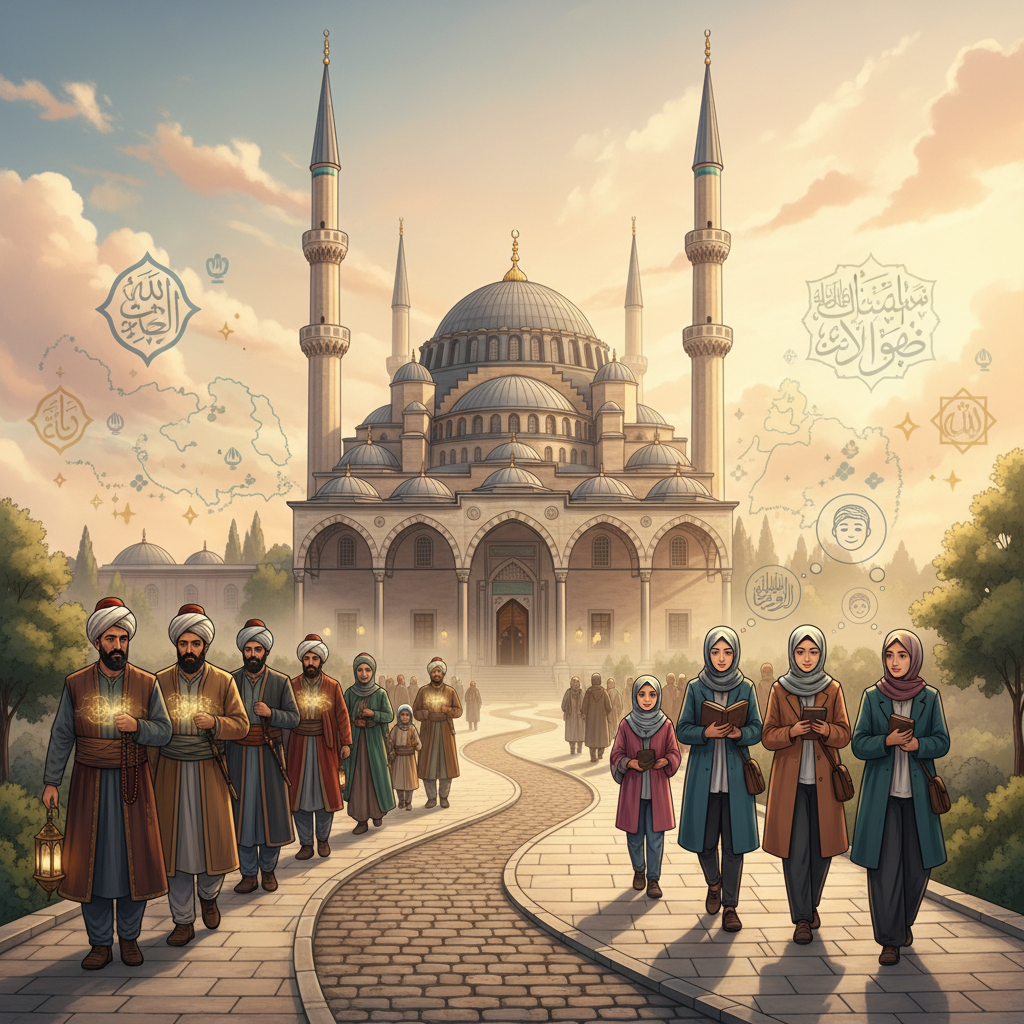
Eyüp Sultan Mosque in 2026: Unveiling the Secrets of Millennia-Old Pilgrimages and Visitations
In 2026, the Eyüp Sultan Mosque remains a vibrant center for pilgrimage in Istanbul, a spiritual journey rooted in over a millennium of history. This iconic site, more than just a place of worship, embodies centuries of devotion and cultural heritage, built by Fatih Sultan Mehmed. Delve into its secrets and enduring traditions today.
Visiting Culture of Eyüp Sultan Mosque: The Secrets Behind Centuries-Old Journeys
Even as we reach the year 2026, the Visiting Culture of Eyüp Sultan Mosque continues to thrive in the heart of Istanbul with its roots spanning over a millennium. This sacred place is more than just a house of worship; it is a symbol of spiritual journeys, dedications, and cultural heritage spanning centuries. Built by Fatih Sultan Mehmed as a sign of conquest after he conquered Istanbul, this mosque holds special significance as it houses the tomb of Eyyûb el-Ensârî Hazretleri.
For a deeper dive into the mosque's artistic legacy, explore The Vibrant Secrets of Eyüp Sultan Mosque – From Architectural Patterns to Artistic Reflections in 2026.
Historical Roots of Eyüp Sultan Mosque's Visiting Culture
The Visiting Culture of Eyüp Sultan Mosque dates back to the conquest of Istanbul. The presence of the tomb of Eyyûb el-Ensârî Hazretleri, the standard-bearer of Prophet Muhammad and one of his earliest companions, has made the region an important center in the Islamic world. Immediately after the conquest, Akşemseddin discovered his tomb, after which Fatih Sultan Mehmed had a mosque and a tomb built there.
This event marked the beginning of a tradition during the Ottoman Empire. Every sultan, upon ascending to the throne, partook in a sword-girding ceremony at the Eyüp Sultan Mosque, demonstrating the central position of the place for both state and religion. These ceremonies brought together the spiritual and political dimensions of the Visiting Culture of Eyüp Sultan Mosque.
Delve into the mosque's role in significant historical events by reading about Wars and Peaces Hosted by Eyüp Sultan Mosque in 2026: Historical Turning Points.
Importance of Visiting During the Ottoman Period
- Visits by Palace Members: Sultans, grand viziers, and other state officials frequently visited this place to pray and make vows. These visits were made with the hope of bringing good fortune to the state and the nation.
- Devotion of the Public: The respect and love for Eyüp Sultan Hazretleri among the populace were immense. His tomb was a place where wishes were conveyed, healing was sought, and spiritual reliance was shown through visits.
- Center of Education and Knowledge: The mosque and its surroundings, together with madrasahs, were important centers of learning. Visitors not only prayed but also acquired knowledge and participated in discussions.
Spiritual Atmosphere and Rituals at Eyüp Sultan Mosque in 2026
In 2026, Eyüp Sultan Mosque retains its spiritual weight and sanctity. During Ramadan, on holy nights (Kandil nights), and on Fridays, the mosque is packed, and visitors from all over the world flock here to visit the tomb of Eyyûb el-Ensârî Hazretleri and pray. Morning prayers, in particular, which hold an important place within the Visiting Culture of Eyüp Sultan Mosque, offer a distinct atmosphere.
Visitors silently pray around the tomb, recite the Quran, and whisper their wishes. Many times, long queues form around the tomb. This is not just a grave visit, but also a process of spiritual purification and renewal. Drinking water from the fountains within the mosque complex is also believed to be a source of healing according to traditional beliefs. For more on the mosque's acoustic properties that enhance this spiritual experience, see Eyüp Sultan Mosque's Acoustic Secrets: Voices Echoing from Minbar to Mihrab 2026.
Today's Visitor Profile and Expectations for Visiting Eyüp Sultan Mosque
While today's visitors' expectations may differ from the past, a common thread is the search for spiritual peace. Local and foreign tourists visit for its historical and cultural significance, while devout individuals hope to receive blessings from the spirituality of Eyüp Sultan Hazretleri. Especially as of 2026, thanks to digitalization and global communication networks, the profile of visitors coming from all over the world has become even more diverse, enriching the Visiting Culture of Eyüp Sultan Mosque.
Visitors want to explore the historical fabric of the mosque and its surroundings, breathe in the atmosphere of Eyüp Sultan, and perhaps enjoy a cup of tea with the Golden Horn view. The mosque offers unique frames for photographers and is also a point of interest for historical researchers. For more statistics and insights on tourism to Istanbul and religious sites, the Turkish Ministry of Culture and Tourism provides valuable data.
Social and Cultural Life in Eyüp Sultan and its Surroundings
Eyüp Sultan Mosque is not only a place of worship but also a vibrant social and cultural area with its surroundings. The bazaars, souvenir shops, bookstores, and establishments offering traditional delicacies around the tomb and mosque are an integral part of the Visiting Culture of Eyüp Sultan Mosque. This region preserves its characteristic as one of Istanbul's oldest and most authentic districts.
The Pierre Loti Hill on the Golden Horn provides visitors with peaceful moments with its unique view, while also offering easy access via cable car. Festivals, Ramadan events, and cultural activities organized throughout the district add color to Eyüp Sultan's social life. These events continue to enhance the district's appeal in 2026. Discover how these traditions come alive during the holy month by exploring Ramadan Under the Shadows of Eyüp Sultan Mosque: A Revival of Tradition in 2026.
Traditional Arts and Handicrafts Reflecting the Visiting Culture
- Calligraphy: In the mosque courtyard and surrounding shops, beautiful examples of calligraphic art can be found. Calligraphers showcase their works using traditional techniques.
- Illumination and Marbling: These arts bring life to many works with motifs suited to the aesthetics of the mosque. Visitors have the opportunity to see the intricacies of these handicrafts up close.
- Süleymaniye stone carving and tile art: Stone carving and tile art, also seen in the architecture of Eyüp Sultan Mosque, are still kept alive in the surrounding workshops. These products attract the interest of both local and foreign tourists, contributing to the rich Visiting Culture of Eyüp Sultan Mosque.
Sustainability and Future of Eyüp Sultan Mosque's Visiting Culture
Today, the Visiting Culture of Eyüp Sultan Mosque is gaining new dynamics with global developments and increasing tourist numbers. Preserving the spiritual atmosphere of this sacred place, transferring cultural heritage to future generations, and offering a sustainable visitor experience are of great importance. As of 2026, digitalization and environmental sensitivity are accelerating efforts in this area.
Local administrations and non-governmental organizations are carrying out various projects to protect the historical fabric of Eyüp Sultan Mosque and to provide better services to visitors. Restoration works, environmental landscaping, and information services enrich the visitor experience. For insights into preservation efforts, consult the UNESCO World Heritage Centre, which lists historic areas of Istanbul.
Contribution of Digitalization to Visitor Experience for Eyüp Sultan Mosque
In 2026, digital platforms play an important role for those wishing to visit Eyüp Sultan Mosque. Virtual tours, mobile applications, and information websites offer comprehensive information before and during the visit. This allows visitors to have a more conscious experience about the mosque's history, architecture, and the Visiting Culture of Eyüp Sultan Mosque.
Shares made on social media platforms bring the beauties and spirituality of Eyüp Sultan to the whole world, attracting the interest of new generation visitors. Augmented reality (AR) applications aim to bring the mosque's past state to life, offering a more interactive experience to visitors.
Conclusion: Visiting Culture of Eyüp Sultan Mosque Defies Centuries
The Visiting Culture of Eyüp Sultan Mosque has defied centuries to reach today, a unique heritage that preserves its vitality and sanctity. In 2026, this blessed place continues to be a spiritual harbor for both local people and visitors from all over the world. With its tomb, architecture, historical fabric, and surroundings, Eyüp Sultan Mosque reflects the spirit of Istanbul in the most beautiful way.
This deep-rooted visiting culture carries traditions from the past into the future, while renewing itself by integrating with the opportunities offered by the modern world. Eyüp Sultan will continue to be not just a place of worship, but also a way of life, a symbol of faith, and a place of cultural memory, sustained by its enduring Visiting Culture of Eyüp Sultan Mosque.
Sıkça Sorulan Sorular
What is the significance of Eyüp Sultan Mosque in 2026?
In 2026, the Eyüp Sultan Mosque remains a crucial spiritual and cultural landmark in Istanbul. It houses the tomb of Eyyûb el-Ensârî Hazretleri, a companion of Prophet Muhammad, making it a revered pilgrimage site for Muslims worldwide. The mosque symbolizes centuries of spiritual journeys, dedications, and holds deep historical importance dating back to the Ottoman conquest of Istanbul, continuing to draw visitors seeking spiritual connection and heritage.
When did the pilgrimage culture of Eyüp Sultan Mosque begin?
The pilgrimage culture of Eyüp Sultan Mosque began immediately after the conquest of Istanbul in 1453. Following the discovery of Eyyûb el-Ensârî Hazretleri's tomb by Akşemseddin, Sultan Mehmed II (Fatih Sultan Mehmed) ordered the construction of a mosque and a tomb at the site. This foundational act established the mosque as a central hub for religious pilgrimage and significant events like the sword-girding ceremonies for Ottoman sultans.
What traditions from the Ottoman period are linked to Eyüp Sultan Mosque?
During the Ottoman period, Eyüp Sultan Mosque was central to both state and religious life. Sultans underwent sword-girding ceremonies there upon ascension to the throne, symbolizing the fusion of spiritual and political power. Palace members and the public frequently visited for prayers and vows, seeking blessings and showing devotion to Eyyûb el-Ensârî Hazretleri. It also served as an important center for education and knowledge, with madrasahs providing learning opportunities.
What kind of spiritual atmosphere can visitors expect at Eyüp Sultan Mosque in 2026?
In 2026, visitors to Eyüp Sultan Mosque can expect a profoundly spiritual and hallowed atmosphere. The mosque is particularly busy during Ramadan, holy nights, and Fridays. People from all over the world gather to visit the tomb of Eyyûb el-Ensârî Hazretleri, offering prayers, reciting the Quran, and whispering wishes. The morning prayers are especially noteworthy, contributing to the distinct spiritual ambiance of this revered site.