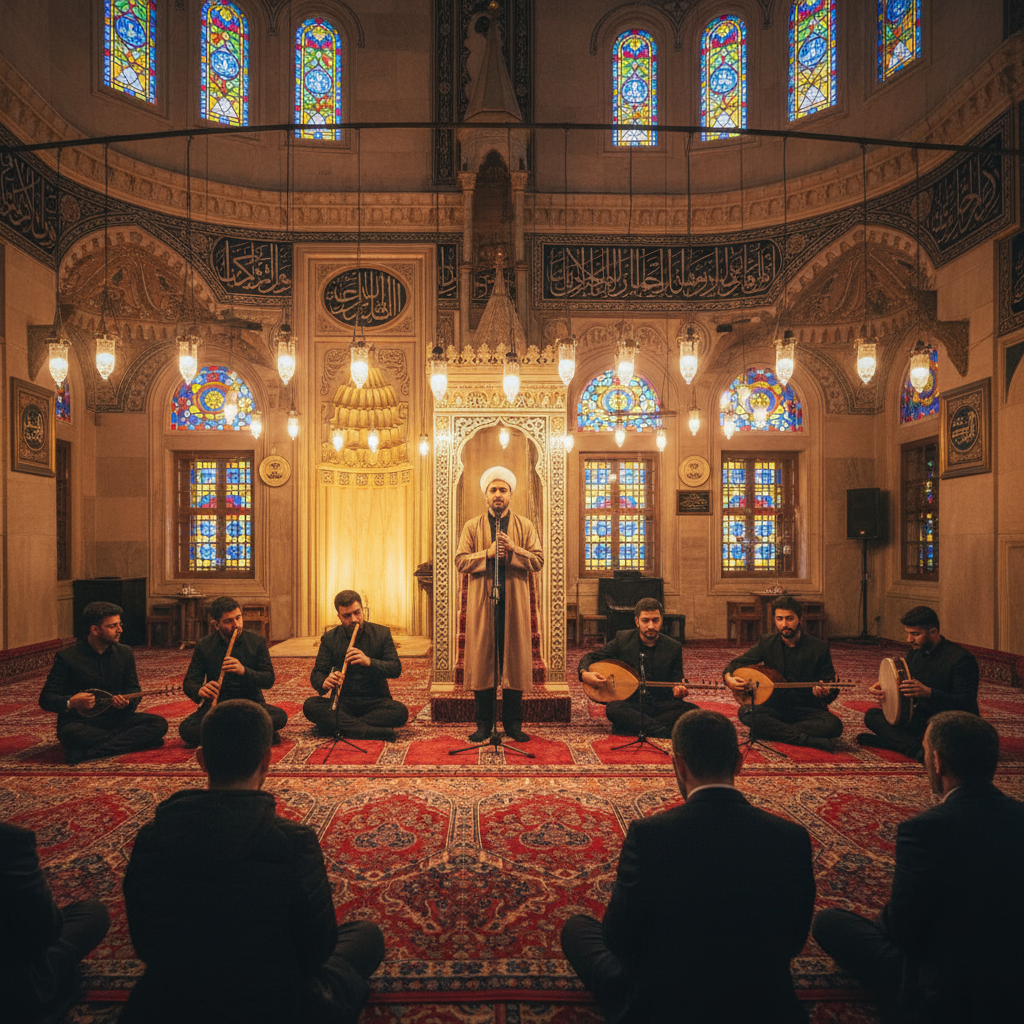
Eyüp Sultan Mosque in 2026: Divine Melodies from the Minbar and its Musical Heritage
Eyüp Sultan Mosque, a spiritual and historical landmark in Istanbul, is renowned for its centuries-old musical heritage. Housing the tomb of Eyüp El-Ensari, this sacred site continues to enchant visitors with its unique 'Eyüp Sultan Mosque music' tradition, deeply rooted in its spiritual core and resonating vibrantly even in 2026.
Eyüp Sultan Camii Musiki: Divine Melodies Ascending from the Minbar and Ancient Heritage in 2026
Eyüp Sultan Mosque, the spiritual heart of Istanbul and a witness to history, holds unique value not only for its architecture but also for its centuries-old musical tradition. This sacred place, housing the tomb of the great companion Eyüp El-Ensari, continues to touch hearts with its rich Eyüp Sultan Camii musiki. Even in 2026, the serene atmosphere of the mosque purifies souls with divine melodies rising from the minbar, allowing the past and future to coexist harmoniously.
Origins and History of the Eyüp Sultan Camii Musiki Tradition
Eyüp Sultan Mosque stands as one of the first grand mosque complexes of the Ottoman Empire, built by Fatih Sultan Mehmet immediately after the conquest of Istanbul. From the outset, music, an integral part of Islamic civilization, has always held a special place within the mosque. Adhans (calls to prayer), salawat (invocations), mawlids (poems celebrating the birth of the Prophet Muhammad), and ilahis (hymns) are fundamental elements that deepen the spiritual atmosphere of the mosque.
Music and Mosque Relationship in the Ottoman Era
- Adhan and Salawat: In the Ottoman period, muezzins were not merely religious officials but also skilled musicians. Adhans were recited following maqam rules, evoking different emotions with maqams chosen according to the congregation's mood.
- Mawlid and Ilahis: Mawlid recitations and ilahis performed on special religious days, particularly on Mawlid Kandili (Mawlid Night), were among the richest parts of the mosque's musical tradition. These works were usually composed and performed in classical Turkish music maqams.
- Rituals and Dhikrs: Dhikrs (remembrances of God) and halvet (seclusion) rituals performed inside the mosque and its courtyard were also executed with specific musical forms and rhythms. These forms of worship represented the direct union of music and spirituality.
The Eyüp Sultan Camii musiki tradition was further enriched by the activities of the Mevlevi and Bektashi dervish orders in Istanbul. The importance these orders attached to music led directly to contributions from the tekkes (dervish lodges) and zaviyes (smaller dervish lodges) around the mosque to music education. Even today, these profound influences are clearly felt in the religious music performances at the mosque. For context on Sufi music's broader influence, you can explore UNESCO's intangible cultural heritage list regarding the Mevlevi Sema ceremony.
Current Musical Practices at Eyüp Sultan in 2026
As we observe 2026, Eyüp Sultan Mosque continues its deeply rooted musical tradition by seamlessly combining it with the possibilities of the digital age. Musical programs are now organized not only within the mosque itself but also reach thousands of people through online platforms, expanding its reach significantly.
Regular Musical Performances and Events
- Weekly Mawlid Programs: Especially on Thursday evenings, mawlid programs are held, keeping alive the tradition of mawlid recitation accompanied by classical Turkish music instruments. These programs attract great interest from both local and foreign visitors.
- Ilahis on Special Days and Nights: During Kandils, Ramadan, and Eid al-Adha, special performances are offered by professional ilahi groups in the mosque courtyard and indoors. These performances are typically conducted with traditional costumes and instruments, honoring the mosque's historical fabric.
- Support for Young Talents: The administration of Eyüp Sultan Mosque and the local Eyüpsultan Municipality organize music courses and workshops to train young musicians. These courses guide young people interested in religious music and actively ensure the transmission of this cherished tradition to future generations.
The Eyüp Sultan Camii musiki events attract the attention not only of worshippers but also of everyone interested in our rich cultural heritage. Both local and foreign tourists are consistently deeply impressed by the magical atmosphere created by these melodies. This spiritual connection is often highlighted in the context of Istanbul's merchant culture rooted in spirituality.
Preservation and Future of Eyüp Sultan Camii Musiki Heritage
As with many historical artifacts, the preservation of the Eyüp Sultan Camii musiki heritage is of paramount importance. Consequently, various dedicated efforts are underway to ensure this precious heritage is passed on intact to future generations.
Digital Archiving and Documentation Efforts
- Music Recordings: All musical performances held at the mosque are transferred to digital media with high-quality audio and video recordings. These archives serve as an important and invaluable resource for researchers and music lovers alike.
- Oral History Projects: Interviews with former muezzins, mawlid reciters, and musicians who have served in the mosque are meticulously documented as an important part of oral history. In this way, the intricacies and anecdotes of the musical tradition are thoroughly recorded.
- Notation Archives: Historical handwritten ilahi and mawlid notations are being digitized and cataloged. This vital work brings to light compositions that were on the verge of being lost and makes them readily available to modern performers.
As of 2026, thanks to rapidly developing technology, the Eyüp Sultan Camii musiki archives are being disseminated to wider audiences, and awareness regarding the critical importance of cultural heritage preservation is being actively raised. For a broader understanding of Turkish traditional music, including religious forms, the Turkish Ministry of Culture and Tourism's website provides excellent resources.
Music in the Spiritual Atmosphere of Eyüp Sultan Mosque
Eyüp Sultan Mosque is not merely a place of worship but also a sacred complex offering a deep spiritual atmosphere. This profound atmosphere is undoubtedly enhanced and richly complemented by Eyüp Sultan Camii musiki.
A Blend of Sound and Silence
As one steps into the mosque courtyard, a mystical tranquility immediately pervades the air. The echoing calls to prayer at certain times of the day invite the congregation to worship, offering a serenity that touches the soul. The intricate maqam transitions in the recitation of adhans transport listeners to a different, ethereal realm. Between prayer times, in an environment dominated by silence and soft whispers, visitors embark on a profound inner journey.
Melodies Merging with Spirituality
The ilahis and qasidas performed during mawlid programs or special nights elevate the spiritual experience to its absolute peak. These melodies are a source of healing not only for the ears but also for the heart. Specifically, the classical Turkish music maqams such as Hüseyni, Uşşak, and Saba, which are synonymous with Eyüp Sultan Camii musiki, evoke a deep sense of reverence and surrender in listeners. These sounds, seamlessly combined with the spiritual atmosphere of the tomb, almost stop time and transport one to truly ethereal realms.
Eyüp Sultan Camii Musiki Experience for Visitors
Visitors to Eyüp Sultan Mosque have the unique opportunity to experience not only its architectural beauty but also its profoundly rich musical tradition. In 2026, this experience has been made even more special and accessible.
Guided Tours and Music Introductions
- Mosque guides explain to visitors not only the history and architecture of the mosque but also its vibrant musical tradition. Detailed information is provided about old musical instruments and classical maqams.
- Thanks to innovative QR code technology, visitors can instantly access historical music recordings performed at the mosque directly via their smartphones, enriching their visit.
Eyüp Sultan Camii musiki, extending far beyond being merely a cultural heritage, is a unique element that profoundly nourishes the souls of visitors, drawing them deep into the essence of this ancient and spiritual place. In the coming years, dedicated efforts will continue to preserve this valuable tradition and to make it accessible to even wider audiences, ensuring its legacy endures. You can learn more about the broader spiritual identity of Istanbul in the shadow of Eyüp Sultan Mosque. To understand the architectural grandeur that houses this musical heritage, details on its construction are available through academic resources like Islam Ansiklopedisi, Eyüp Sultan Camii entry (Turkish Encyclopedia of Islam).
Sıkça Sorulan Sorular
What is the significance of the Eyüp Sultan Camii musiki tradition in 2026?
In 2026, the Eyüp Sultan Camii musiki tradition continues to be a vital part of Istanbul's spiritual and cultural heritage. It enriches the sacred atmosphere of the mosque with divine melodies, calls to prayer (adhans), and devotional hymns (ilahis). This tradition, deeply rooted in Ottoman history, blends music and spirituality, allowing visitors to experience a harmonious connection between the past and present at this revered site.
How did music integrate into the Eyüp Sultan Mosque during the Ottoman era?
During the Ottoman era, music was intricately woven into the fabric of the Eyüp Sultan Mosque. Muezzins were adept musicians who delivered adhans and salawat using specific maqams to evoke various emotions. Mawlids and ilahis, composed in classical Turkish music maqams, were regularly performed, especially on religious nights. Additionally, dhikrs and halvet rituals held both within the mosque and its courtyards were performed with distinct musical forms and rhythms, highlighting music's direct union with spirituality.
What role did dervish orders play in the Eyüp Sultan Camii musiki tradition?
The Mevlevi and Bektashi dervish orders significantly contributed to the enrichment of the Eyüp Sultan Camii musiki tradition. These orders, known for their deep appreciation and integration of music into their spiritual practices, had tekkes and zaviyes (dervish lodges) in and around Istanbul. Their activities and musical education directly influenced and enhanced the mosque's musical heritage, further solidifying the connection between devotional music and spiritual life in the region.
When was the Eyüp Sultan Mosque built?
The Eyüp Sultan Mosque is one of the first major mosque complexes constructed by Fatih Sultan Mehmet immediately following the Ottoman conquest of Istanbul. Its construction marked a significant point in the city's history, establishing it as a spiritual and architectural landmark at the heart of the Ottoman Empire from its earliest days.