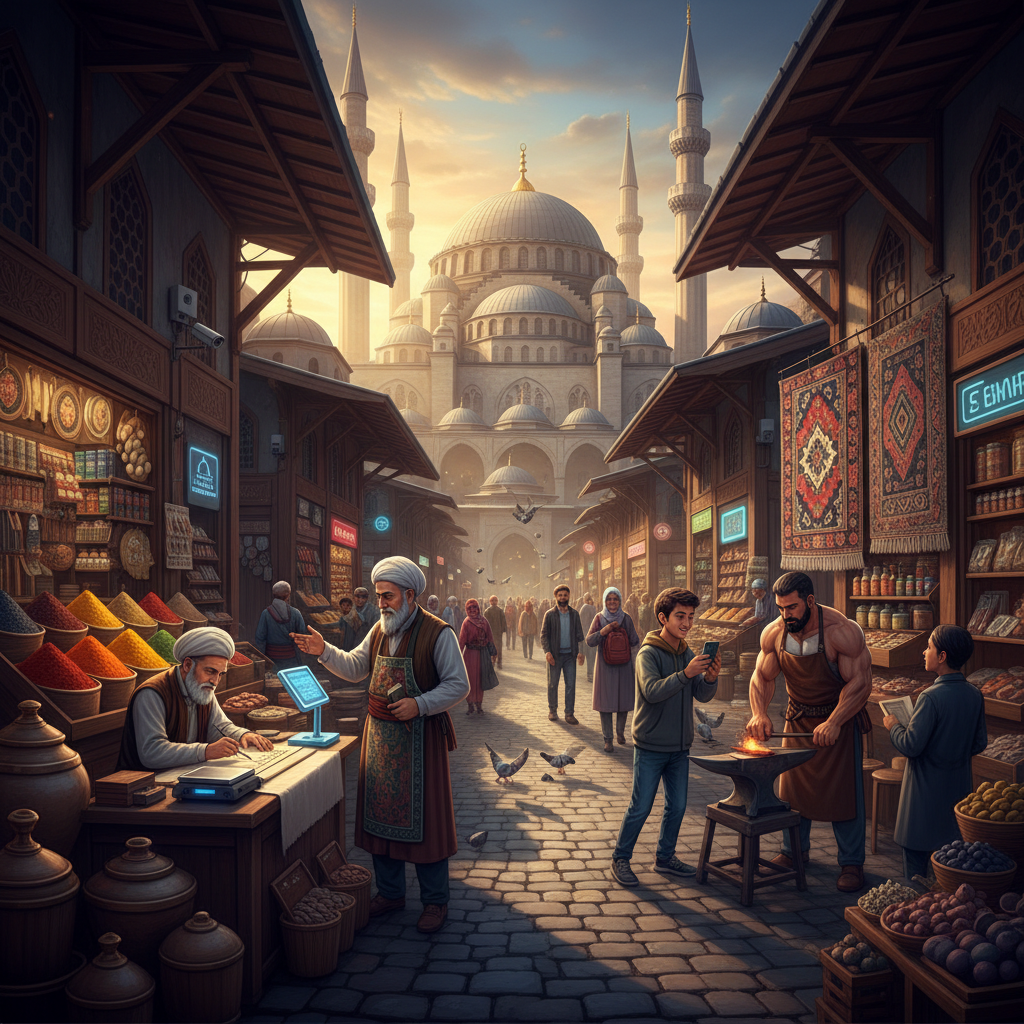
The Merchant Culture Shaped by the Shadows of Eyüp Sultan Mosque in 2026: Spirituality at the Heart of the Bazaars
Eyüpsultan, an ancient district of Istanbul, continues to captivate visitors with its historical fabric and spiritual atmosphere. In 2026, the unique merchant culture surrounding the Eyüp Sultan Mosque remains a vibrant testament to the enduring link between faith and commerce in this revered location.
Eyüp Sultan Mosque Merchant Culture: Spirituality at the Heart of the Bazaars
Eyüpsultan, one of Istanbul's ancient districts, has always captivated its visitors with its historical fabric, spiritual atmosphere, and unique culture. At the center of this enchanting atmosphere, without a doubt, stands the Eyüp Sultan Mosque. Even in 2026, the Eyüp Sultan Mosque merchant culture that flourished around the mosque is a vibrant example of a deep-rooted tradition from centuries ago adapted to modern life. This culture is not merely a commercial exchange but also the very heart of a spiritual bond, neighborly relations, and solidarity, defining the unique Eyüp Sultan Mosque merchant culture.
The Eyüp Sultan Mosque and the Emergence of Historical Merchant Culture
The construction of the Eyüp Sultan Mosque took place immediately after Sultan Mehmed the Conqueror's conquest of Istanbul. Over time, the neighborhoods and bazaars formed around this sacred place, combined with the mosque's spiritual allure, created a special merchant culture. Merchants not only earned their livelihoods but also made significant contributions to the social life of the mosque and the region. Even in 2026, this tradition continues to exist despite the changes brought by modern life. For a deeper understanding of the surrounding environment, consider reading about Eyüp Sultan Mosque's Legacy Beyond Its Walls in 2026: The Surrounding Dervish Lodges and Their Impact on Sufi Currents.
Eyüp Sultan's First Bazaars and Structures
With the construction of the mosque, structures such as lodging places, hammams, and soup kitchens began to rise around it, particularly to serve pilgrims performing Hajj and Umrah. These structures, over time, led to the revitalization of trade and formed a merchant backbone in the region. The bazaars of that period laid the foundations for today's Eyüp Sultan Mosque merchant culture.
The Reflection of Spirituality in Trade
The commercial activities of merchants in Eyüp Sultan have always carried a spiritual dimension. The traces of the Ahi tradition came alive in these bazaars with principles of honesty, trustworthiness, and mutual aid. This understanding manifested itself in many areas, from the quality of products to the dialogue established with customers. Today's merchants also strive to keep this heritage alive. For more on the mosque's wider influence, explore In the Shadows of Eyüp Sultan Mosque in 2026: Istanbul's Conquest Spirit and Spiritual Identity.
Eyüp Sultan Mosque Merchant Culture in 2026: Between Tradition and Modernity
Today, Eyüp Sultan Mosque merchant culture continues to evolve with the changes brought by technological developments and globalization. However, deep-rooted traditions persist, blended with modern marketing strategies. Shops offering particularly religious products, souvenirs, and local delicacies attract significant interest.
Souvenir and Keepsake Shops
Eyüp Sultan is an important stop for visitors to purchase souvenirs and gifts. Rosaries, jewelry, religious objects, miniature mosque models, and many other products find their place on the merchants' stalls. These products serve as both a memento and a part of the Eyüp Sultan Mosque merchant culture. Even in 2026, these shops maintain their density.
Local Delicacy Stops
Eyüp Sultan's bazaars are famous not only for spiritual objects but also for mouth-watering local delicacies. Eyüp Sultan simit, varieties of Turkish delight, helva, and sherbets are indispensable stops for visitors. These flavors, combined with the hospitality of the merchants, offer an unforgettable experience.
Social and Economic Structure of Merchants: Within the Context of Eyüp Sultan Mosque Merchant Culture
The merchant community in Eyüp Sultan is more than just a commercial group; it is a structure with strong social bonds. Neighborly relations, professional solidarity, and shared values form the basis of this community. These principles, inherited from the Ahi tradition, can still be observed in 2026, strengthening the Eyüp Sultan Mosque merchant culture.
Spirit of Solidarity and Mutual Aid
Supporting each other in difficult times and sharing joyful moments are prominent characteristics of Eyüp Sultan merchants. From a merchant's wedding celebration to another's funeral, the merchant community comes together as one in all kinds of social events. This situation is one of the most beautiful reflections of the Eyüp Sultan Mosque merchant culture.
Work Ethic Shaped by the Influence of the Mosque
The spiritual atmosphere of the mosque deeply affects the work ethic of the merchants. Principles such as not extending one's hand to the forbidden, respecting others' rights, and not concealing defects in goods are central to commercial activities. This ethical understanding prioritizes customer satisfaction and trust. You can learn more about the deep-rooted traditions by exploring The Woven Rugs of Eyüp Sultan Mosque: "Fringes of Paradise" and the Story of Centuries-Old Artisans (2026).
Eyüp Sultan Heritage from Past to Future: Preservation of Merchant Culture
Eyüp Sultan Mosque merchant culture is not just a relic of the past but a unique heritage that must be carried into the future. The preservation and transmission of this heritage to future generations are of great importance both culturally and economically.
Role of Local Administrations and Non-Governmental Organizations
Local administrations like Eyüpsultan Municipality and various non-governmental organizations are carrying out important projects to keep this unique culture alive. Supporting traditional arts, empowering small merchants, and preserving the historical fabric of the region are among these efforts. As of 2026, an increase in such work is critical for preserving the region's cultural richness. The Eyüpsultan Municipality website provides further information on local initiatives.
Impact of Digitalization and E-commerce
In today's world, digitalization and e-commerce are inevitable. Eyüp Sultan merchants are also adapting to this change by moving their products to online platforms. However, in this process, it is important to preserve the social fabric of the bazaar and the tradition of "handcrafted art." The balance between the traditional shop atmosphere and online accessibility is a vital issue for Eyüp Sultan Mosque merchant culture.
Eyüp Sultan Mosque Merchant Culture and Tourism Relationship
Eyüp Sultan's charm attracts millions of local and foreign tourists every year. For these tourists, Eyüp Sultan Mosque merchant culture is an inseparable part of their visit. The friendliness of the merchants, authentic products, and the general atmosphere of the region increase its tourism potential.
Sustainable Tourism Approaches
It is important that tourism contributes to the region without distorting the unique structure of the merchant culture. Sustainable tourism approaches will both increase visitor satisfaction and improve the quality of life for merchants. In this context, supporting local products and traditional handicrafts is of great importance. Insights into Istanbul's broader tourism strategy can be found on the Go Türkiye official tourism portal for Istanbul.
Experiential Trade for Visitors
Visitors to Eyüp Sultan not only shop but also have an experience. Warm dialogues with merchants, learning the stories behind products, and witnessing the history of the region are important elements of this experiential trade. In 2026, promoting such interactions will help preserve the region's unique culture. Eyüp Sultan Mosque merchant culture is also known for its hospitality. The historical significance of such marketplaces is often highlighted by organizations like UNESCO, protecting world heritage sites like historic urban areas.
In conclusion, even in 2026, Eyüp Sultan Mosque merchant culture continues to exist as a vibrant heritage that brings together the spiritual depth of the past with the dynamics of the present. Preserving this unique culture means preserving the cultural richness of not only a region but also all of Istanbul and Turkey. Eyüp Sultan's bazaars are not merely a place of commerce but also a sacred stop where the soul and history meet.
Sıkça Sorulan Sorular
What is the Eyüp Sultan Mosque merchant culture?
The Eyüp Sultan Mosque merchant culture is a vibrant, centuries-old tradition that has adapted to modern life around the historic Eyüp Sultan Mosque in Istanbul. It's not just about commercial exchange but also embodies spiritual bonds, neighborly relations, and community solidarity, reflecting the deep-rooted traditions of the area even in 2026.
How did the Eyüp Sultan merchant culture originate?
The merchant culture originated after the construction of the Eyüp Sultan Mosque following Sultan Mehmed the Conqueror's conquest of Istanbul. As various structures like lodging places, hammams, and soup kitchens were built to serve pilgrims, trade flourished, establishing the commercial backbone of the region and evolving into the merchant culture seen today in 2026.
What role does spirituality play in the merchant culture of Eyüp Sultan?
Spirituality has always been a core dimension of commercial activities in Eyüp Sultan, reflecting the principles of the Ahi tradition like honesty, trustworthiness, and mutual aid. This spiritual understanding influences product quality and customer interactions, with merchants in 2026 still striving to uphold this heritage.
How has the Eyüp Sultan Mosque merchant culture adapted to modernity in 2026?
In 2026, the Eyüp Sultan Mosque merchant culture blends deep-rooted traditions with modern marketing strategies. While embracing technological advancements and globalization, it maintains its core identity. Shops offering religious products, souvenirs, and local delicacies remain popular, attracting visitors seeking both traditional and contemporary goods.
What kind of products are commonly sold in Eyüp Sultan's bazaars for visitors?
Visitors to Eyüp Sultan's bazaars in 2026 can find a wide variety of souvenirs and gifts. Popular items include rosaries, various types of jewelry, religious objects, miniature mosque models, and other local products that serve as mementos of their visit to this historically and spiritually significant district.