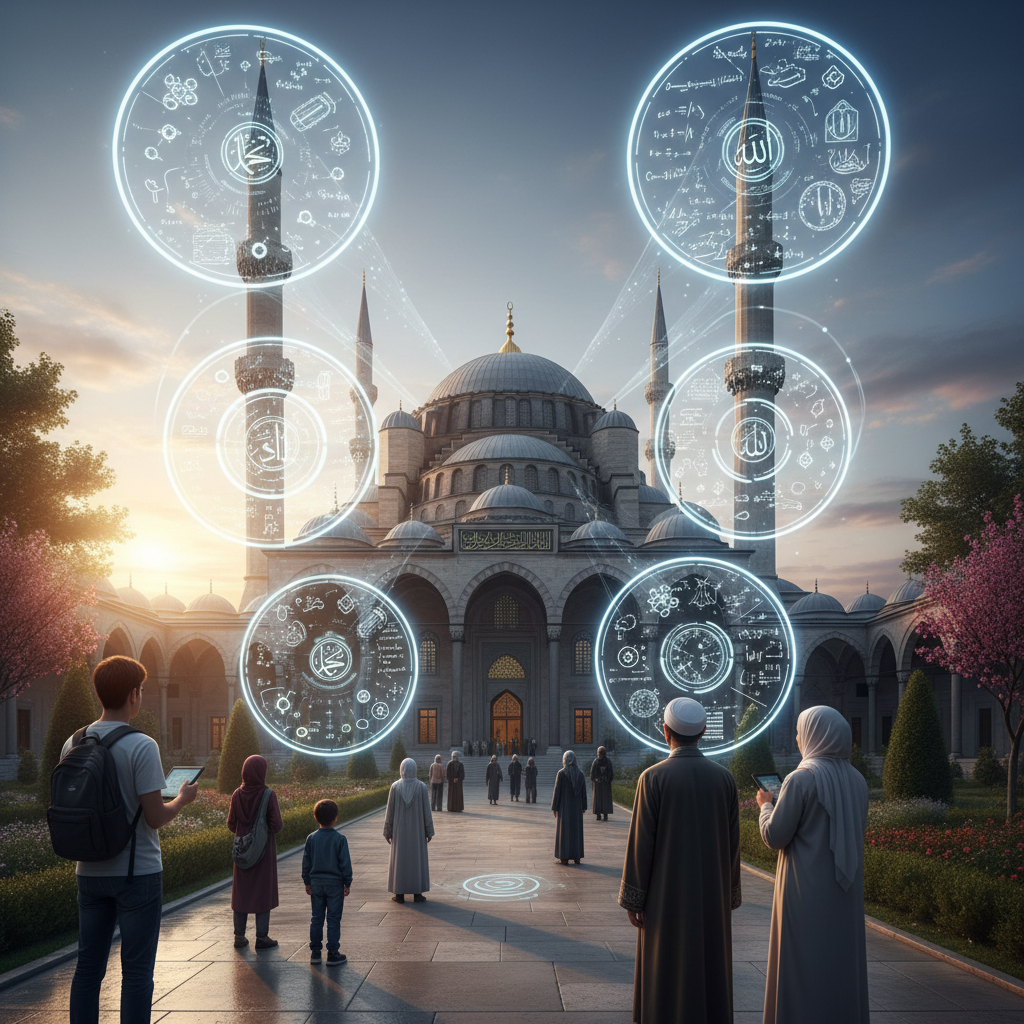
Circles of Knowledge and Wisdom Rising in the Shadows of Eyüp Sultan Mosque in 2026: From Serene Lessons to Intellectual Currents
As we enter 2026, the Eyüp Sultan Mosque in Istanbul continues to be a vibrant center for the 'Eyüp Sultan Mosque tradition of knowledge'. More than a place of worship, it's a living beacon where serene lessons evolve into intellectual currents, reflecting a rich history of learning and wisdom.
Eyüp Sultan Camii İlim: Circles of Science and Wisdom Rising in 2026
As we enter 2026, in the heart of Istanbul, the Eyüp Sultan Mosque, radiating light for centuries with its spiritual atmosphere, is not merely a place of worship. Indeed, it also represents a living legacy of the ancient Eyüp Sultan Camii ilim, or tradition of knowledge. This blessed sanctuary, a sacred trust from Fatih Sultan Mehmed, has always been a focal point for those seeking understanding, wisdom, and enlightenment. Here, alongside prayers, a profound intellectual and ideological life flourished through its madrasahs, study circles, and libraries. The history of Eyüp Sultan Mosque directly reflects the Ottoman and broader Islamic tradition of knowledge.
The Historical Evolution of Eyüp Sultan Mosque as a Hub of Knowledge
Since its inception, Eyüp Sultan Mosque has consistently served as both Istanbul's spiritual heart and a significant center for knowledge and wisdom. Fatih Sultan Mehmed's dedication to this area laid the foundation for a vibrant civilization around the mosque. Right from its earliest years, madrasahs built adjacent to the mosque transformed it into an educational stronghold. Remarkably, these historical academic foundations are still evident in 2026. To understand the profound depth of its heritage, consider exploring the architectural and historical significance of Eyüp Sultan Mosque in 2026.
Fatih Sultan Mehmed's Vision and the First Madrasahs
Following the conquest of Istanbul, Fatih Sultan Mehmed meticulously oversaw the reconstruction of the Eyüp Sultan Mosque and its surroundings. The establishment of the first madrasahs attracted leading scholars of the time, ensuring a high standard of education. In these institutions, religious sciences like tafsir (Quranic exegesis), hadith, fiqh (Islamic jurisprudence), and kalam (Islamic theology) were taught. Furthermore, positive sciences such as mathematics, astronomy, and medicine were also part of the curriculum. This broad range of subjects clearly indicates the wide spectrum covered by the Eyüp Sultan Mosque's understanding of knowledge.
The Role of Eyüp Sultan Madrasahs in the Ottoman Era
During the Ottoman Empire's ascent, the Eyüp Sultan madrasahs emerged as a vital center, training qadis (judges), müderris (professors), and even, on occasion, viziers and grand viziers. Alongside other prominent madrasahs in Istanbul, the educational establishments in Eyüp Sultan nurtured the intellectual and bureaucratic personnel of the state. Scholars trained here made substantial contributions to the world of knowledge through their written works and lectures, reinforcing the profound Eyüp Sultan Camii ilim and its lost manuscripts.
Study Circles and Lessons Around Eyüp Sultan Mosque
Beyond its prayer times, the mosque itself hosted numerous study circles and lessons. Especially within the mosque's arcades, courtyards, and nearby dervish lodges and zawiyas, various subjects were taught throughout the day. These lessons not only elevated the religious and intellectual capacities of the public but also played a crucial role in cultivating new generations of scholars. This continuous pursuit of learning exemplified the vibrant Eyüp Sultan Camii ilim.
Mosque Interior Study Circles and Discussions
Within the Eyüp Sultan Mosque, particularly in its quiet corners and around its pillars, study circles between scholars and students thrived for centuries. These lessons delved into subjects such as the exegesis of the Holy Quran, commentaries on hadith, and intricate fiqh issues. Available to a wide audience, from common people to the elite, these public lessons showcased the enduring vitality of the Eyüp Sultan Mosque tradition of knowledge. Truly, the Eyüp Sultan Camii ilim has always been accessible and enriching, particularly during significant periods like Ramadan.
The Guiding and Educational Role of Dervish Lodges and Zawiyas
Numerous dervish lodges and zawiyas encircled Eyüp Sultan. While typically centers for Sufi education and spiritual guidance, these institutions also offered instruction in religious sciences. In some dervish lodges, studies on classical Islamic works and language courses, including Arabic and Persian, were known to take place. In this regard, Eyüp Sultan served as a significant point where both exoteric and esoteric sciences converged. For more on the historical context of Islamic scholarship, one might refer to resources like Oxford Islamic Studies Online, which provides a comprehensive overview of scholarly traditions.
- Quranic recitation and tafsir lessons
- Hadith readings and commentaries
- Fiqh and fundamental Islamic law education
- Arabic and Persian language courses
- Sufi sciences and spiritual guidance conversations
Eyüp Sultan Mosque's Legacy of Knowledge Today: A 2026 Perspective
Even in 2026, the Eyüp Sultan Mosque and its environs continue to bear the imprint of its extensive legacy of knowledge and wisdom. Modern educational institutions, foundations, and civil society organizations are actively working to preserve and adapt this ancient tradition to contemporary conditions. Conferences, seminars, and lessons still held in Eyüp Sultan are a living continuation of this rich legacy, demonstrating the persistent influence of Eyüp Sultan Camii ilim.
Modern Educational Institutions Integrating Traditional Teaching
Today, around Eyüp Sultan, modern educational institutions have taken the place of the historical madrasahs. Theology faculties, Imam Hatip high schools, and various courses, deeply inspired by the mosque's spiritual ambiance, provide students with contemporary sciences alongside religious studies. Hence, the Eyüp Sultan Mosque lamp of knowledge continues to burn brightly, albeit in a renewed form. This ongoing evolution is critical for shaping childhoods and impacting young generations in 2026.
Contributions from Foundations and Civil Society Organizations
Many foundations and civil society organizations in Eyüp Sultan undertake diverse activities to uphold the mosque's tradition of knowledge. These organizations aim to transmit the legacy to new generations through educational programs, cultural events, and publications, with a special focus on youth. These concerted efforts consistently strengthen Eyüp Sultan's identity as a vibrant center of knowledge, emphasizing the enduring nature of Eyüp Sultan Camii ilim. Understanding the role of religious endowments, or waqf, provides further context for these institutional contributions.
- Traditional calligraphy, illumination, and marbling art courses
- Modern interpretations and panels on Islamic sciences
- Religious and cultural education camps for young people
- Research on Eyüp Sultan's history and culture
The Impact of Eyüp Sultan Mosque on Knowledge and Thought Currents
Eyüp Sultan Mosque was more than just a place of lessons; it was also a crucial center where diverse currents of thought were debated and new ideas flourished. Notably, the sometimes-recurring discussions between Sufi thought and the fiqh and kalam schools significantly deepened intellectual discourse. This sacred venue provided a tolerant space where different viewpoints could be openly expressed, contributing richly to the comprehensive Eyüp Sultan Camii ilim.
The Place of Sufi Thought within Eyüp Sultan
Given its role as the burial site for many revered Sufi masters, Eyüp Sultan has historically been a pivotal center for Sufi thought. The mosque, along with its surrounding dervish lodges and zawiyas, fostered both the theoretical and practical dimensions of Sufism. Sufi scholars trained in Eyüp Sultan made substantial contributions to theological literature through their writings and the students they educated. This aspect of the Eyüp Sultan Mosque tradition of knowledge also instilled profound spiritual depth.
Bridging Different Scientific Disciplines
Eyüp Sultan's focus was not solely on religious sciences. During its time, it also served as a place where positive sciences were taught to a considerable extent. Various scientific branches, from astronomy to mathematics, and from medicine to geography, found a space within its madrasahs and private study circles. This demonstrates Eyüp Sultan's wide scientific spectrum and its function as a bridge between disciplines. This comprehensive educational approach remains one of the most distinctive features of the Eyüp Sultan Mosque basin of knowledge, further enriching the Eyüp Sultan Camii ilim. For further reading on the historical contributions of Islamic scholars in various sciences, sources like Muslim Heritage offer valuable insights.
The Future of Eyüp Sultan Mosque's Knowledge Tradition and the 2026 Vision
In 2026 and moving forward, substantial efforts are underway to advance the Eyüp Sultan Mosque's tradition of knowledge and wisdom. Digitalization, global accessibility, and contemporary pedagogical techniques are opening new avenues to share this ancient legacy with broader audiences. In the future, Eyüp Sultan is poised to remain an active center of knowledge and thought, transcending its role as merely a historical relic.
Eyüp Sultan's Legacy of Knowledge in Digital Realms
Today, transferring the Eyüp Sultan Mosque's legacy of knowledge and wisdom into digital environments is paramount. Online lessons, digital libraries, virtual tours, and digital archives are now providing resources that were formerly inaccessible or physically difficult to obtain, to researchers and enthusiasts worldwide. In this manner, the Eyüp Sultan Mosque tradition of knowledge can achieve a truly global impact, making the Eyüp Sultan Camii ilim universally available.
The Eyüp Sultan Academy for Future Generations
To ensure the transmission of Eyüp Sultan's knowledge legacy to future generations, the establishment of modern educational units, such as the "Eyüp Sultan Academy," is a key initiative. These academies will seamlessly integrate traditional sciences with contemporary methodologies, thereby nurturing young scholars and intellectuals. Consequently, Eyüp Sultan will continue to shine as a vibrant beacon of knowledge and wisdom in 2026 and beyond. The Eyüp Sultan Mosque tradition of knowledge and wisdom will endure, effectively building a bridge from the past to the future.
Sıkça Sorulan Sorular
What is the Eyüp Sultan Camii ilim?
The 'Eyüp Sultan Camii ilim' refers to the rich tradition of knowledge and wisdom associated with the Eyüp Sultan Mosque in Istanbul. It encompasses the historical academic foundations, study circles, libraries, and broader intellectual life that have flourished around the mosque for centuries, continuing to be a vibrant hub for learning in 2026.
How did Fatih Sultan Mehmed contribute to the Eyüp Sultan Mosque becoming a center of knowledge?
Following the conquest of Istanbul, Fatih Sultan Mehmed meticulously oversaw the reconstruction of the Eyüp Sultan Mosque and established the first madrasahs adjacent to it. This initiative attracted leading scholars, laying the foundation for a robust educational center where both religious and positive sciences were taught, significantly shaping its intellectual legacy still evident in 2026.
What subjects were taught in the madrasahs at Eyüp Sultan Mosque?
The madrasahs at Eyüp Sultan Mosque provided a comprehensive curriculum spanning both religious and 'positive' sciences. Religious subjects included tafsir (Quranic exegesis), hadith, fiqh (Islamic jurisprudence), and kalam (Islamic theology). Additionally, students studied mathematics, astronomy, and medicine, demonstrating a wide-ranging approach to knowledge.
What role did the Eyüp Sultan madrasahs play during the Ottoman era?
During the Ottoman Empire, the Eyüp Sultan madrasahs served as a vital educational institution, training key figures for the empire. They produced qadis (judges), müderris (professors), and even, on occasion, high-ranking officials such as viziers and grand viziers, contributing significantly to the intellectual and administrative backbone of the state.