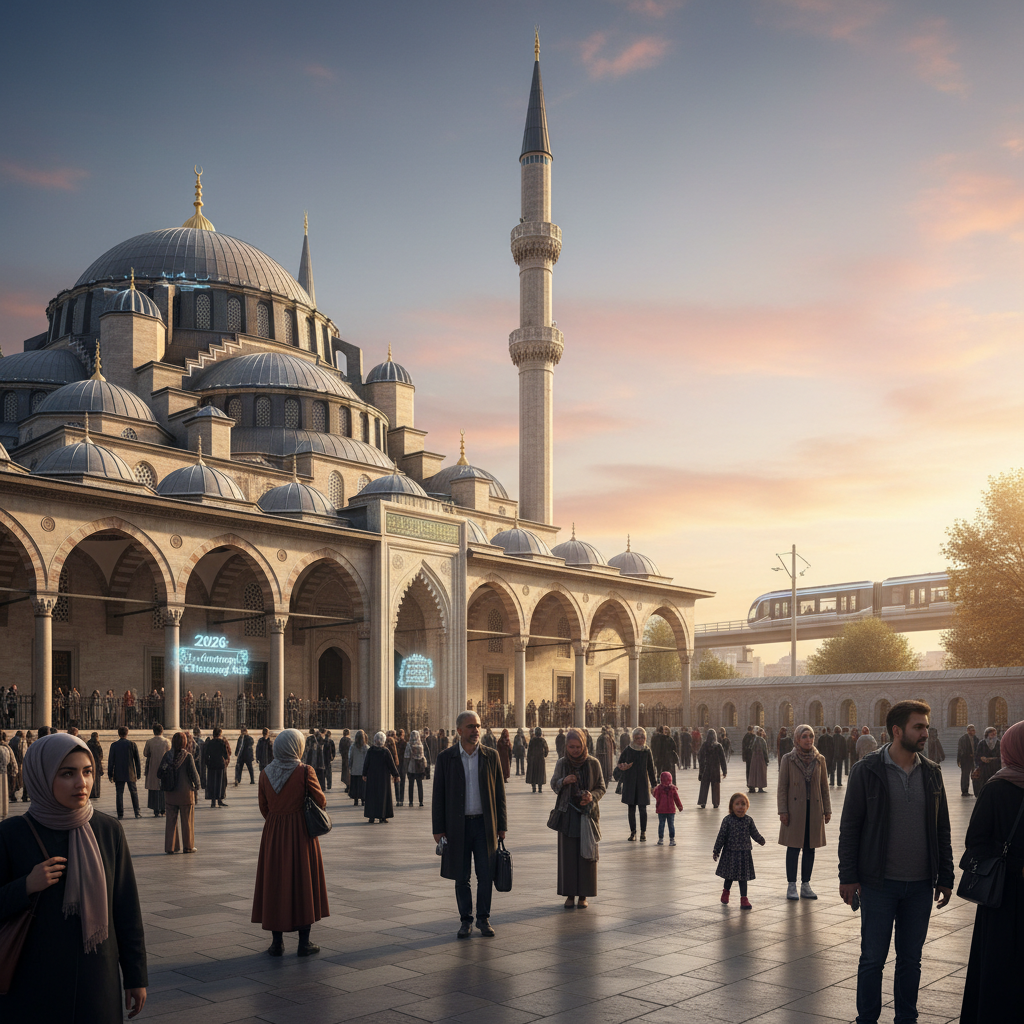
Eyüp Sultan Mosque in 2026: A Cornerstone of Turkish and Ottoman History
Rising in Eyüp, one of Istanbul's ancient districts, the historical site of Eyüp Sultan Mosque is not just a place of worship, but also a living monument to Turkish and Islamic history. As we reach 2026, this unique structure continues to welcome visitors with the spiritual and cultural value it has carried for centuries. This sacred place, a symbol of the conquest of Istanbul, holds a special place in the hearts of many, deeply intertwining with the narrative of both the city and the broader region.
Eyüp Sultan Mosque: A Historic Landmark
Rising in Eyüp, one of Istanbul's ancient districts, the Eyüp Sultan Mosque: A Historic Landmark is far more than a mere place of worship. This revered location stands as a living monument to Turkish and Islamic history. As we reach 2026, this unique structure continues to welcome countless visitors, showcasing the profound spiritual and cultural value it has embodied for centuries. Indeed, this sacred place, a powerful symbol of the conquest of Istanbul, holds a special esteemed position in the hearts of millions of people, due to both its magnificent architecture and the profound meanings it encompasses.
Origins and Construction of Eyüp Sultan Mosque: The First Steps
Significantly, the construction of the Eyüp Sultan Mosque commenced shortly after Fatih Sultan Mehmet's conquest of Istanbul in 1458. The mosque takes its name from Eyüp El-Ensari, the revered standard-bearer and companion of Prophet Muhammad. His tomb was profoundly discovered by Akşemseddin after the conquest, situated at this very point where he is believed to have been martyred during the Byzantine sieges. This pivotal discovery undoubtedly inspired the construction of the mosque, imbuing the entire region with immense spiritual significance.
Spiritual Symbol of the Conquest: The Role of Eyüp El-Ensari
- Eyüp El-Ensari was one of the closest companions of Prophet Muhammad, notably hosting him in his home after his migration to Medina.
- Tragically, he was martyred before the walls of Istanbul during the Arab sieges in the 8th century.
- His tomb was miraculously rediscovered under the spiritual guidance of Fatih Sultan Mehmet and Akşemseddin.
- This monumental discovery reinforced the spiritual power of the conquest, subsequently becoming an important symbol in the Islamization of Istanbul.
Architectural Evolution and Reconstruction Processes
Understandably, while the original mosque showcased characteristics of the Fatih period architecture, it suffered damage over time from natural disasters such as earthquakes and fires. Consequently, it underwent several crucial repairs and extensive reconstruction processes. Notably, in the late 18th century, during the reign of Sultan Selim III, it received an extensive renovation, attaining its current main features. This reconstruction also introduced Baroque and Rococo influences to the mosque's architecture. These ongoing processes highlight the resilient spirit and aesthetic development of the Eyüp Sultan Mosque's architectural history and secrets.
Architectural Features and Artistic Value of Eyüp Sultan Mosque
The Eyüp Sultan Mosque boasts a remarkably rich structure, bearing clear traces from various periods of Ottoman architecture. The main mosque building forms part of a magnificent large complex, known as a külliye. This complex thoughtfully includes numerous structures such as Eyüp El-Ensari's tomb, the hazire (graveyard section), imaret (soup kitchen), madrasa (religious school), and şadırvan (ablution fountain). This comprehensive complex structure stands as an important example of Ottoman urban planning and social life, making the Eyüp Sultan Mosque a true historic landmark.
Unique Architecture of the Main Mosque and the Tomb
The main prayer area of the mosque distinctively stands out with its central plan, majestically supported by domes and semi-domes. Inside, visitors can marvel at the finest examples of the period's tile and calligraphy art. Particularly, the exquisite penmanship and elaborate decorations, showcasing the influence of the Baroque and Rococo periods, add undeniable elegance to the mosque's interior atmosphere. The Tomb of Eyüp El-Ensari, with its intricate tiles, shimmering silver railings, and unique decorations, is indeed a work of art in itself. This sacred tomb has served as a revered pilgrimage site, visited by countless people for centuries, further solidifying the Eyüp Sultan Mosque's status.
Furthermore, significant elements such as the mihrab (prayer niche), minbar (pulpit), and preaching chair inside also powerfully reflect the exceptional craftsmanship and artistic aesthetics of the period. Each meticulously crafted detail offers visitors an unforgettable experience where history and art beautifully intertwine. For a deeper dive into the specific design elements, consider consulting resources like the Archnet Digital Library on Islamic Architecture.
Other Elements and Functions of the Complex
The various structures within the mosque complex were thoughtfully designed to meet a myriad of needs within Ottoman society:
- Imaret: A vital soup kitchen where food was consistently distributed to the poor and to students.
- Madrasa: An important educational institution where Islamic sciences were diligently taught.
- Şadırvan: An aesthetically pleasing water structure where the congregation performed ablution and found respite from the heat.
- Hazire (Graveyard): A sacred area where many prominent members of the Ottoman dynasty and important statesmen were respectfully buried.
This comprehensive collection of structures transformed the Eyüp Sultan Mosque from merely a place of worship into a versatile, dynamic social, and cultural center.
The Place and Importance of Eyüp Sultan Mosque in Ottoman Tradition
During the Ottoman Empire, the Eyüp Sultan Mosque was not only a religious focal point but also hosted crucial state ceremonies and significant social events. The new sultans' sword-girding ceremonies, for instance, were held here, which intrinsically gave the mosque profound political significance.
Sultans' Sword-Girding Ceremonies
The cherished tradition of girding the sword at Eyüp Sultan during the ascension of Ottoman sultans was a powerful symbol of the empire's spiritual power and enduring continuity. These solemn ceremonies reinforced the sultan's religious and political legitimacy. Consequently, the Eyüp Sultan Mosque became a central point, to which the eyes of the entire empire turned during these momentous occasions.
Social Life and Waqf Culture
Thanks to the foundations (waqfs) that developed around the mosque, the Eyüp district flourished into an important center of vibrant life and commerce. These waqfs significantly contributed to the welfare of society by providing essential services in numerous areas such as education, health, shelter, and aid to the poor. Through these vital waqfs, the Eyüp Sultan Mosque and its surrounding area became the beating heart of a dynamic social life for many centuries. For more information on the historical significance of waqfs, you can explore resources like the Museum With No Frontiers on Islamic Art.
Eyüp Sultan Mosque Today: A View from 2026
As of 2026, the Eyüp Sultan Mosque unequivocally remains one of Istanbul's most visited religious and cultural sites. Every year, millions of both local and foreign tourists flock to this sacred place, embarking on both a spiritual journey and tracing the awe-inspiring footsteps of Ottoman history.
Visitor Experience and Spiritual Atmosphere
The mosque and its surroundings are particularly bustling during Ramadan and on Kandil nights. Visitors reverently pray at the Tomb of Eyüp El-Ensari, find serene peace in the mosque's tranquil courtyard, and spend time exploring the surrounding historical bazaars. The truly unique atmosphere of the region deeply affects visitors of all ages. Visiting Eyüp Sultan, especially during the morning prayer or at sunset, provides truly unforgettable moments at this historic landmark.
Conservation and Restoration Works
Crucially, continuous renovation and meticulous restoration works are actively carried out to preserve this invaluable heritage from the past. These ongoing works, executed with modern techniques, meticulously preserve the original texture of the mosque, while simultaneously ensuring its safe transmission to future generations. As of 2026, these meticulous works continue, aiming for the Eyüp Sultan Mosque to reach future generations in a sound and pristine condition.
Characters and Stories of the Eyüp Sultan Mosque
The Eyüp Sultan Mosque is not merely an impressive structure; it is also a grand stage where countless historical characters, significant events, and intriguing myths have unfolded. Many renowned names, ranging from Fatih Sultan Mehmet to various Ottoman sultans, and from Akşemseddin to important scholars of his time, have become intrinsically synonymous with this sacred place.
Heroes of Conquest and Discovery
- Fatih Sultan Mehmet: The visionary conqueror of Istanbul and the revered founder of the mosque.
- Akşemseddin: Fatih's esteemed teacher and the mystical figure who miraculously found Eyüp El-Ensari's tomb.
- Eyüp El-Ensari: Prophet Muhammad's faithful standard-bearer and the spiritual patron of the mosque.
These names are indispensable parts of the profound founding story of the Eyüp Sultan Mosque and its mysterious figures.
Eyüp Sultan in Popular Culture
Beyond its historical context, Eyüp Sultan has found its cherished place in numerous art forms, ranging from captivating literature to insightful cinema, and from timeless folk tales to soulful songs. The region is widely considered an important symbol, powerfully representing Istanbul's mystical and deeply historical side. This eloquently demonstrates the profound impact of the mosque, not only on religious life but also on the broader cultural landscape.
In conclusion, the Eyüp Sultan Mosque, having stood proudly for over six centuries, remains one of Istanbul's and Turkey's most precious treasures. This holds true for both its magnificent architecture and the profound spiritual values it embodies. In 2026, this truly unique heritage from the past will continue to inspire its countless visitors and offer an enriching journey into the captivating depths of history.
Sıkça Sorulan Sorular
What is the Eyüp Sultan Camii?
The Eyüp Sultan Camii is a significant historical and spiritual landmark in Istanbul, functioning as much more than just a place of worship. It serves as a living monument to Turkish and Islamic history, attracting countless visitors in 2026 due to its profound spiritual and cultural value. It stands as a powerful symbol of the conquest of Istanbul and holds a special place in the hearts of millions, admired for both its magnificent architecture and its deeper meanings.
When was the Eyüp Sultan Camii originally constructed?
The construction of the Eyüp Sultan Camii began shortly after Fatih Sultan Mehmet conquered Istanbul in 1458. Its establishment was inspired by the rediscovery of the tomb of Eyüp El-Ensari, a revered companion of Prophet Muhammad, at the site where he is believed to have been martyred during earlier Byzantine sieges. This discovery infused the location with immense spiritual significance, leading to the mosque's creation.
Who was Eyüp El-Ensari and why is he important to the mosque?
Eyüp El-Ensari was a close companion of Prophet Muhammad, known for hosting him in Medina. He was martyred during an 8th-century Arab siege of Istanbul. His tomb's miraculous rediscovery by Akşemseddin after Fatih Sultan Mehmet's conquest in 1458 was pivotal. The mosque is named after him, and his burial site profoundly reinforced the spiritual significance of the conquest, making it an important symbol in the Islamization of Istanbul.
Has the Eyüp Sultan Camii undergone any major renovations?
Yes, while the original mosque reflected Fatih period architecture, it suffered damage over time from natural disasters like earthquakes and fires. Consequently, it underwent several crucial repairs and extensive reconstruction processes. Notably, a significant renovation occurred in the late 18th century during Sultan Selim III's reign, which largely shaped its current main architectural features visible in 2026.