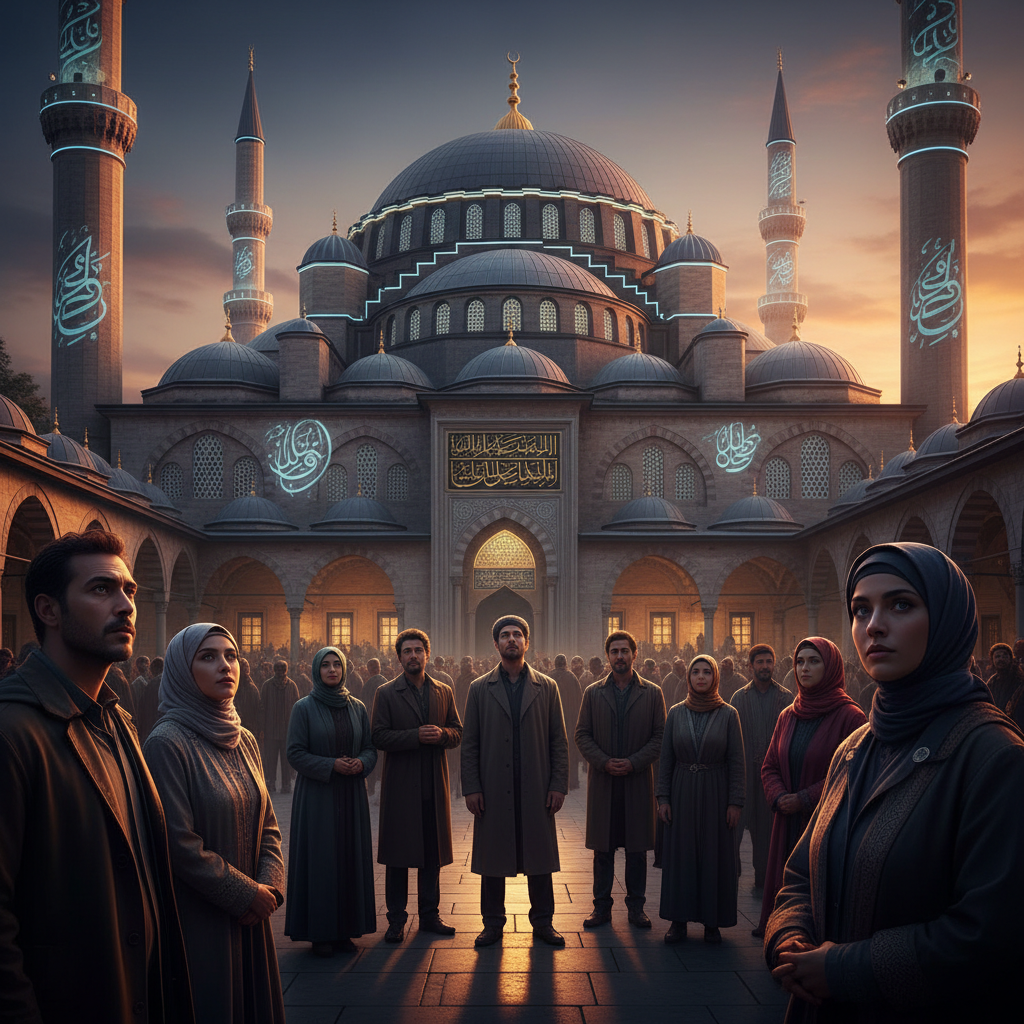
Eyüp Sultan Mosque and Its Mysterious Figures: Embark on a Discovery in 2026
Rising in Eyüp, one of Istanbul's ancient districts, the Eyüp Sultan Mosque captivates visitors not only with its architecture but also with the historical figures it embraces. This sacred place has a deep history extending from the founding of the Ottoman Empire to the present day, with every corner interwoven with legends and true stories. Maintaining its splendor even in 2026, the mosque...
Eyüp Sultan Mosque: Historical Figures and Legacies
Rising majestically in Eyüp, one of Istanbul's ancient districts, the Eyüp Sultan Camii captivates visitors not only with its exquisite architecture but also with the remarkable historical figures it embraces. This sacred place boasts a deep history extending from the founding of the Ottoman Empire to the present day, with every corner interwoven with legends and true stories. Maintaining its splendor, even in 2026, this significant mosque offers its visitors a unique journey back in time. In this article, we will examine in detail the eminent personalities behind this magnificent structure and their inseparable ties to the mosque, focusing on the prominent Eyüp Sultan Mosque: Historical Figures and Legacies.
Eyüp Sultan Mosque and Its First Occupant: Abu Ayyub al-Ansari
When it comes to the Eyüp Sultan Mosque: Historical Figures and Legacies, the first name that undoubtedly comes to mind is Abu Ayyub al-Ansari. The mosque is, in fact, named after him, and he is buried within its revered grounds. This blessed individual, who famously hosted Prophet Muhammad in his home for seven months during the Hijra, later participated in the conquest of Istanbul and was martyred during the city's siege. The discovery of his tomb became a great source of spiritual strength for Fatih Sultan Mehmet, further solidifying his significant place among the esteemed figures associated with the mosque. His story is central to understanding the Eyüp Sultan Mosque: Historical Figures and Legacies.
Abu Ayyub al-Ansari's Pivotal Role in the Conquest of Istanbul
Although Abu Ayyub al-Ansari was of advanced age when he participated in the siege of Istanbul, he provided immense spiritual support to the Islamic army. His very presence boosted the morale of the soldiers and strengthened their belief that the conquest was inevitable. His profound words before his martyrdom, indeed, "The conquest of Constantinople will only be by the foot of a Muslim," foreshadowed the conquest that took place centuries later, cementing his legacy as one of the pivotal Eyüp Sultan Mosque: Historical Figures and Legacies.
Discovery of His Tomb and the Foundations of the Mosque's Construction
Following the conquest of Istanbul, Fatih Sultan Mehmet's revered teacher, Akshamsaddin, discovered the precise location of Abu Ayyub al-Ansari's tomb. This vital discovery was widely accepted as the spiritual crowning of the conquest itself. Consequently, the mosque construction process, which commenced immediately with a tomb, was completed in a remarkably short time. Since then, the mosque has served as both a crucial place of worship and a significant pilgrimage site, inherently linked to these foundational historical figures and its construction, contributing to the rich tapestry of Eyüp Sultan Mosque: Historical Figures and Legacies.
Ottoman Sultans' Sword-Girding Ceremonies and Eyüp Sultan Mosque
Significantly, the Eyüp Sultan Camii hosted an immensely important ritual in Ottoman Empire history: the sword-girding ceremonies. Every new sultan who ascended the throne would gird his sword here, in the deeply spiritual presence of Abu Ayyub al-Ansari, and declare his caliphate. This impactful ceremony served as a powerful symbol of the sultan's religious and political legitimacy, connecting numerous Eyüp Sultan Mosque: Historical Figures and Legacies across generations.
A Tradition Extending from Fatih Sultan Mehmet to Vahdettin
This enduring tradition, which began with the great Fatih Sultan Mehmet, continued uninterrupted until the last Ottoman Sultan, Vahdettin. Each sword-girding ceremony was not merely the start of a sultan's reign, but also a clear indicator of deep continuity and spiritual allegiance within the broader Ottoman state tradition. Clearly, these ceremonies brought together significant Eyüp Sultan Mosque: Historical Figures and Legacies with the highest-ranking individuals of the state, showcasing the mosque's paramount importance.
The Spiritual and Political Meaning of the Ceremonies
The sword-girding ceremonies profoundly symbolized the sultans as both the leader of the Islamic world and the chief of the ghazis. These ceremonies, notably held next to Abu Ayyub al-Ansari's tomb, affirmed that the new sultan upheld the spiritual heritage of his predecessors and would diligently continue the spirit of conquest. Furthermore, in this way, the loyalty of the people and scholars to the new sultan was significantly strengthened, thanks to the endorsement by the venerable Eyüp Sultan Mosque: Historical Figures and Legacies.
Architects and Works of Eyüp Sultan Mosque
Indeed, the current magnificent structure of the mosque has attained its final form through various additions and meticulous restorations made in different periods. This sacred place, reflecting the exquisite elegance of Ottoman architecture with its mihrab, minbar, and other decorations, carries the dedicated labor of many famous architects and artists—truly remarkable Eyüp Sultan Mosque: Historical Figures and Legacies.
Mimar Sinan and 16th Century Additions
- During the reign of Suleiman the Magnificent, interest in Eyüp Sultan Camii increased substantially. Consequently, significant arrangements and improvements were made in and around the mosque by the legendary Mimar Sinan, adding to its grand narrative and the list of Eyüp Sultan Mosque: Historical Figures and Legacies.
- Notably, Mimar Sinan's additions to the mosque complex increased the size and grandeur of the structure considerably.
- Furthermore, structures such as the imaret (soup kitchen) and hammam (bathhouse) built during this period ensured that Eyüp Sultan Camii functioned not only as a place of worship but also as a vibrant living center, thanks to these influential Eyüp Sultan Mosque: Historical Figures and Legacies.
Other Notable Restorations and Contributors
The mosque, which underwent repairs many times throughout the Ottoman period, was extensively rebuilt in the 18th century by Sultan Selim III. This significant rebuilding process gave the mosque its unique current Baroque characteristics. During these extensive renovation works, numerous calligraphers, skilled tile-makers, and expert carving masters contributed their talents to the enduring beauty of the mosque. We can certainly add many artists from this significant period to the distinguished list of Eyüp Sultan Mosque: Historical Figures and Legacies.
The Spiritual Atmosphere and Vast Visitors of Eyüp Sultan Mosque
Even today, the Eyüp Sultan Camii continues to welcome thousands of visitors from all over Turkey and diverse parts of the world. Visitors here both perform their religious duties and, importantly, pray in the profound spiritual presence of Abu Ayyub al-Ansari. Furthermore, the Eyüp Sultan Cemetery, which surrounds the mosque, serves as the eternal resting place of many other significant figures, enriching the legacy of the historical figures of Eyüp Sultan Camii and its surroundings. This continuous flow of visitors highlights the enduring appeal of Eyüp Sultan Mosque: Historical Figures and Legacies.
- The mosque experiences a heavy influx of devoted visitors, particularly during Ramadan and Eid al-Adha.
- On weekdays and weekends, local and international tourists alike journey here to experience the unique historical and spiritual atmosphere of the mosque.
- The mosque bazaar, in its turn, attracts visitors with its charming shops offering religious accessories, souvenirs, and traditional delicacies.
As of 2026, virtual tours of the mosque are increasingly organized in the digitized world, and compelling documentaries about its rich history are published. In this progressive way, even those who cannot physically visit the revered place can still learn about the impactful Eyüp Sultan Mosque: Historical Figures and Legacies and deeply feel its sacred atmosphere.
Eyüp Sultan Mosque and Its Enduring Legacy for Future Generations
The deep history of the Eyüp Sultan Camii, richly filled with integral Eyüp Sultan Mosque: Historical Figures and Legacies, has made it not only a vital place of worship but also a paramount center of education and culture. This mosque stands as a powerful symbol of a rich cultural and spiritual heritage that inherently needs to be passed on to future generations. Accordingly, various foundations and non-governmental organizations are carrying out important work to diligently preserve and promote the mosque, highlighting its connection to the significant historical figures of Islamic heritage.
Dedicated Conservation and Restoration Works
Regular restoration and precise maintenance work are consistently carried out to preserve the mosque and its entire complex. These dedicated efforts aim to transfer the invaluable historical fabric of the structure to future generations without causing any damage. In this intricate process, modern techniques are harmoniously brought together with traditional craftsmanship, safeguarding the contributions of all Eyüp Sultan Mosque: Historical Figures and Legacies.
Educational and Cultural Activities
The Eyüp Sultan Camii and its immediate surroundings also serve as an important center for religious education and diverse cultural events. Inspiring sermons, insightful talks, and beneficial Quran courses organized at the mosque offer spiritual guidance for the local population. Additionally, conferences and exhibitions focusing on the mosque's rich history and architectural splendor are also frequently held. These activities significantly increase public awareness about the profound impact of the Eyüp Sultan Mosque: Historical Figures and Legacies.
In conclusion, even as we arrive in 2026, the Eyüp Sultan Camii continues to be one of Turkey's most important and revered historical sites, a testament to the enduring impact of its associated Eyüp Sultan Mosque: Historical Figures and Legacies.
Sıkça Sorulan Sorular
Who are the prominent historical figures associated with Eyüp Sultan Camii?
The most prominent historical figure associated with Eyüp Sultan Camii is Abu Ayyub al-Ansari, after whom the mosque is named. He was a close companion of Prophet Muhammad and played a significant spiritual role in the early Islamic period and the siege of Constantinople. Other figures, such as Ottoman Sultans and architects involved in its construction and preservation, also contribute to its rich history.
Why is Abu Ayyub al-Ansari so important to Eyüp Sultan Camii?
Abu Ayyub al-Ansari is crucial because the Eyüp Sultan Camii is named in his honor, and his revered tomb is located within its premises. He hosted Prophet Muhammad in Medina and later participated in the siege of Constantinople, where he was martyred. The discovery of his tomb after the conquest of Istanbul was a significant spiritual event that led to the mosque's construction on this sacred site.
What was Abu Ayyub al-Ansari's role in the conquest of Istanbul?
Although Abu Ayyub al-Ansari was elderly, his participation in the siege of Istanbul provided immense spiritual support and boosted the morale of the Islamic army. His presence and his prophesy regarding the city's eventual conquest were seen as a strong indicator of divine will, making him a pivotal figure in the historical and spiritual context of the conquest.
When was Abu Ayyub al-Ansari's tomb discovered?
Abu Ayyub al-Ansari's tomb was discovered after the conquest of Istanbul by Fatih Sultan Mehmet. The precise location was found by Fatih Sultan Mehmet's revered teacher, Akshamsaddin. This discovery was considered a spiritual validation of the conquest and led to the establishment of the Eyüp Sultan Camii on that significant site.