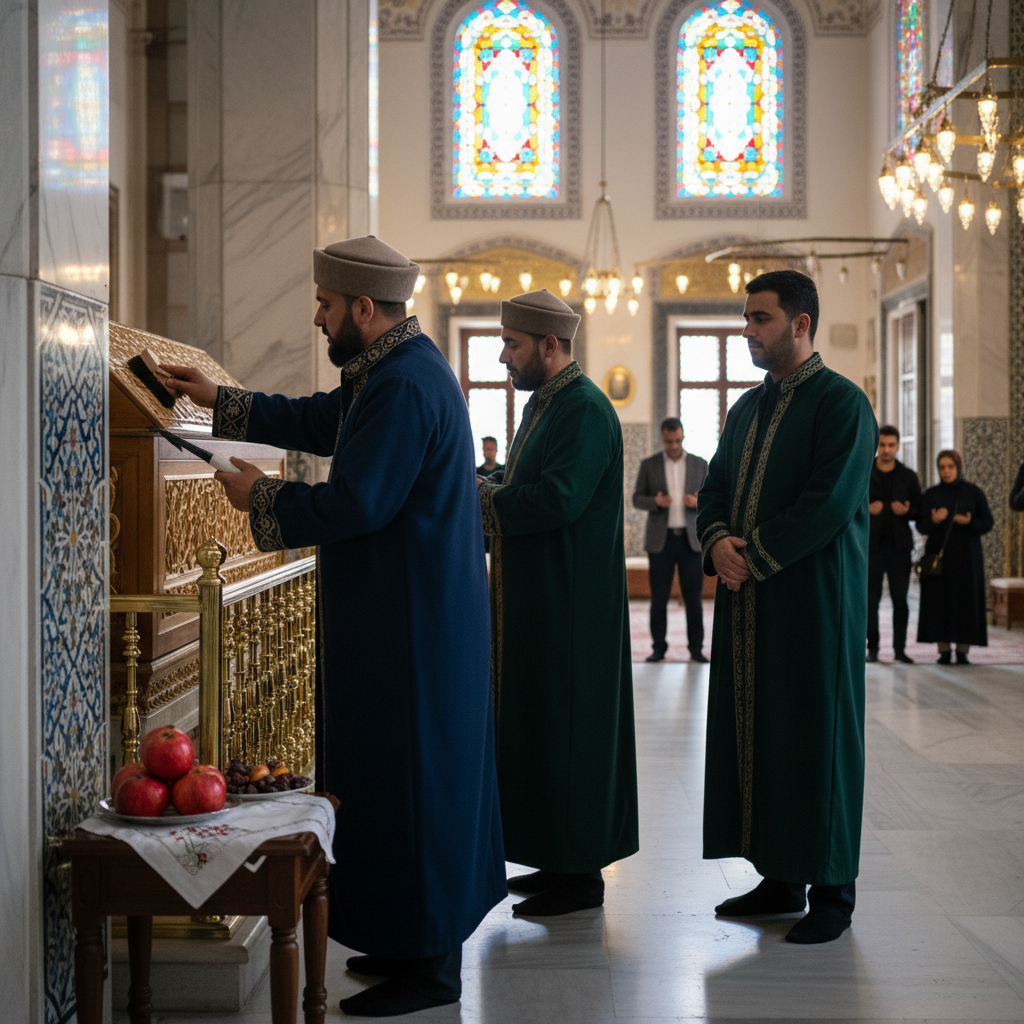
Eternal Guardians of Eyüp Sultan Mosque in 2026: Tomb Officials and the Votive Tradition
Eyüp Sultan Mosque in Istanbul has been a spiritual beacon for over a millennium. Central to its enduring sanctity are the generations of guardians dedicated to its mausoleum and the powerful votive tradition they uphold. As we navigate 2026, these guardians continue their vital service, ensuring the spiritual essence of this hallowed mosque endures through their unwavering devotion and commitment to ancient customs.
Eyüp Sultan Mosque Tomb Keepers: Eternal Keepers and the Vow Tradition (2026)
Eyüp Sultan Mosque has stood for over a thousand years as the spiritual heart of Istanbul. Undoubtedly, one of the most important elements of this sacred place is the dedicated service of the Eyüp Sultan Mosque Tomb Keepers and their generations-long devotion. As we reach 2026, these keepers continue to be an important part of the tradition, keeping the spirituality of this blessed mosque alive, accepting vows, and mediating prayers. They are not merely employees, but also living bearers of the legacy of Eyüp Sultan Hazretleri.
Historical Role and Importance of Eyüp Sultan Mosque Tomb Keepers
Since the construction of Eyüp Sultan Mosque, the maintenance of the mausoleum, visits, and the management of vows have been a special duty and responsibility. The Eyüp Sultan Mosque Tomb Keepers not only ensured the peace of the mosque and the mausoleum, but also guided visitors in their spiritual needs. This sacred duty has reached us today as a legacy passed down from generation to generation, reflecting the broader Faces of Eyüp Sultan Mosque Through the Centuries.
Mausoleum Guardianship in the Ottoman Period
During the Ottoman Empire, mausoleum guardianship held significant religious and social status. Guardians were generally chosen from among devout and knowledgeable individuals, becoming instantly recognizable by their cloaks and turbans. Their duty was to ensure the cleanliness of the mausoleum, assist visitors, recite the Quran, and deliver offerings for the sake of Allah to the appropriate places. These individuals were highly respected by the mosque community and visitors.
The Place of Mausoleum Guardians After the Republic
With the proclamation of the Republic and the closure of dervish lodges and zawiyas, the institution of mausoleum guardianship also underwent change. However, in important centers such as the Eyüp Sultan Mosque, this tradition continued in a different form. Today, Eyüp Sultan Mosque Tomb Keepers continue their official duties under the Directorate of Religious Affairs, but they retain their spiritual position in social memory. In 2026, their presence is still a source of security and peace for visitors, much like the enduring memoirs echoed in the historic stones.
The Vow Tradition and the Role of Eyüp Sultan Mosque Tomb Keepers
The mausoleum of Eyüp Sultan Hazretleri is a sacred place where millions of people from all over Turkey and various parts of the world make vows and wishes. This vow tradition is a testament to a strong belief that has persisted for centuries. The Eyüp Sultan Mosque Tomb Keepers are among the most important facilitators of this tradition.
Types and Meanings of Vows
- Sacrificial Vows: Sacrificial animals usually offered for the fulfillment of a wish or for gratitude. The keepers assist with the proxy slaughter and distribution of the meat.
- Money Vows: Monetary donations given for the maintenance of the mausoleum, the needs of the mosque, or to help the poor.
- Material Vows: The donation of items such as oil lamps, prayer beads, or headscarves to the mausoleum or mosque.
- Spiritual Vows: Personal commitments such as reciting the Quran for a certain period, performing prayers, or fasting.
Each vow symbolizes a person's inner intention and their reliance on Allah. Eyüp Sultan Mosque Tomb Keepers guide visitors, mediate, and ensure that these vows are carried out correctly and used for their intended purpose. In this way, vows become more than just a material act; they serve as a spiritual bridge. For a deeper understanding of spiritual practices, you might explore the Islamic perspective on vows.
Daily Life and Duties of Eyüp Sultan Mosque Tomb Keepers (2026)
In 2026, the Eyüp Sultan Mosque Tomb Keepers continue to serve with a busy and sacred duty schedule. Their daily routine involves a series of responsibilities that extend from the opening to the closing of the mausoleum.
Main Duties of the Mausoleum Keepers
- Ensuring the cleanliness and order of the mausoleum and its surroundings.
- Guiding visitors, answering their questions, and assisting them with spiritual matters.
- Receiving and recording vows and delivering them to the relevant places (e.g., directing sacrificial donations to soup kitchens, monetary aid to those in need).
- Reciting the Quran and praying inside the mausoleum, keeping the spiritual atmosphere alive.
- Working in coordination with mosque management and security units.
- Actively participating in programs organized on special days and holy nights, such as during Ramadan under the Shadows of Eyüp Sultan Mosque.
These duties, beyond being merely physical work, require great patience, tolerance, and spiritual devotion. As the representatives of this centuries-old tradition in 2026, the Eyüp Sultan Mosque Tomb Keepers approach every visitor with the same care and sensitivity.
Social Interaction of Eyüp Sultan Mosque and Its Tomb Keepers
Eyüp Sultan Mosque is not only a place of worship but also a social living center. At the heart of this center are the Eyüp Sultan Mosque Tomb Keepers, who are in deep interaction with society. Through their dialogues with visitors, they play an important role in the intergenerational transfer of spiritual values.
Spiritual Guidance and Source of Trust
Mausoleum keepers serve as a kind of spiritual guide for many people. Those who wish to share their troubles, seek advice, or simply find spiritual support turn to them. Their calm and understanding approach provides visitors with confidence and helps them find inner peace. In 2026, every visitor to Eyüp Sultan Mosque encounters the sincere and heartfelt helpfulness of the Eyüp Sultan Mosque Tomb Keepers, reflecting the wider role of Spiritual Leaders of Eyüp Sultan Mosque.
Guardians of Traditions
Every detail experienced at Eyüp Sultan Mosque is part of centuries-old traditions. The mausoleum keepers are one of the most important elements that keep these traditions alive. The acceptance of vows, the distribution of sacrifices, prayer ceremonies, and the etiquette of visiting the mausoleum are experienced correctly under their guidance. Thus, both historical continuity is ensured and visitors become part of a deep spiritual legacy. The Eyüp Sultan Mosque Tomb Keepers bear the responsibility of passing on this precious legacy to future generations. The historical significance of such roles is often studied in broader historical contexts, for example, by institutions like The Ottoman Archives.
Conclusion: The Eternal Legacy of Eyüp Sultan Mosque Tomb Keepers
Eyüp Sultan Mosque is not only the geographical but also the spiritual center of Istanbul. One of the elements that has kept the centuries-old spirituality of this sacred place alive has undoubtedly been the Eyüp Sultan Mosque Tomb Keepers. They are not only the protectors of the mausoleum but also the continuation of the vow tradition, spiritual guides, and a bridge between society and the mosque.
As we reach 2026, despite the changes brought by technology and fast-paced life, the Eyüp Sultan Mosque Tomb Keepers continue to carry this sacred trust from the past with great dedication. Their presence not only contributes to the peaceful atmosphere of the mosque but also offers visitors the opportunity to forge a deep connection with history, faith, and spirituality. These eternal keepers will continue to light the way for future generations as living witnesses to the legacy of Eyüp Sultan Hazretleri. For more perspectives on the sociological impact of religious sites and their caretakers, academic resources like JSTOR may offer relevant articles and studies about religious traditions and community roles.
Sıkça Sorulan Sorular
Who are the guardians of Eyüp Sultan Mosque mausoleum in 2026?
As of 2026, the guardians of Eyüp Sultan Mosque mausoleum are dedicated individuals who uphold a generations-long tradition of service. They are not just employees but also spiritual bearers of the legacy of Eyüp Sultan Hazretleri, mediating prayers and accepting vows. They ensure the mosque's spirituality endures and continue their official duties under the Directorate of Religious Affairs, while maintaining their significant spiritual standing in the community.
What is the historical role of the Eyüp Sultan Mosque mausoleum guardians?
Historically, the guardians have been responsible for the maintenance of the mausoleum, managing visits, and overseeing vow traditions. During the Ottoman period, they held high religious and social status, guiding visitors, ensuring cleanliness, reciting the Quran, and distributing offerings. This sacred duty has been passed down through generations, with guardians acting as spiritual guides and upholders of tradition.
How has the role of mausoleum guardians evolved after the Republic of Turkey?
Following the establishment of the Republic and the closure of dervish lodges, the institution of mausoleum guardianship adapted. In 2026, while they now perform official duties under the Directorate of Religious Affairs, their spiritual significance in society remains strong. They continue to provide a sense of security and peace for visitors at key religious sites like the Eyüp Sultan Mosque.
What is the vow tradition at Eyüp Sultan Mosque and how do guardians assist?
The vow tradition at Eyüp Sultan Mosque involves millions making wishes and vows, demonstrating a centuries-old belief. Mausoleum guardians are crucial facilitators of this tradition. They assist with various types of vows, such as sacrificial vows where they help with the proxy slaughter and distribution of meat, and money vows which involve monetary donations for the mosque or charity.