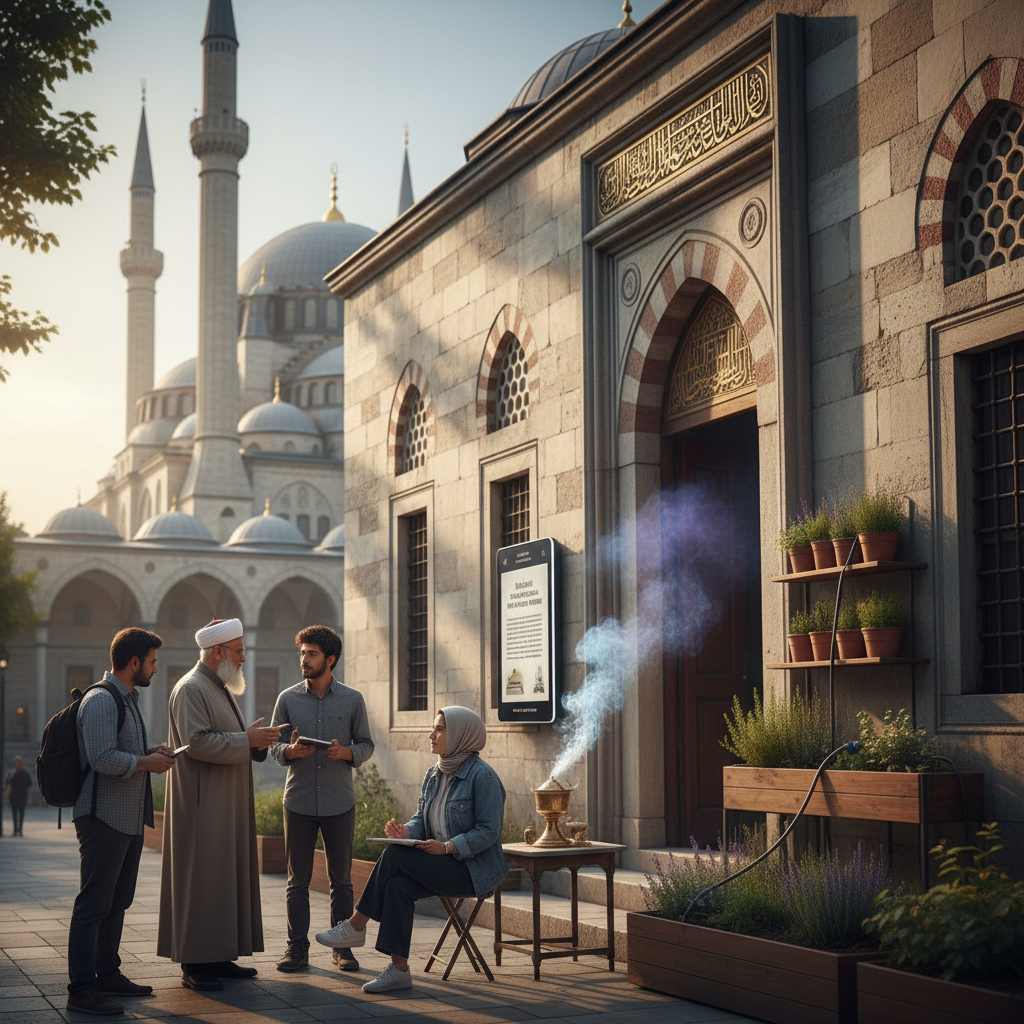
Eyüp Sultan Mosque's Legacy Beyond Its Walls in 2026: The Surrounding Dervish Lodges and Their Impact on Sufi Currents
Eyüp Sultan, an ancient district of Istanbul, is renowned for its magnificent mosque and a rich mystical tradition, particularly the Eyüp Sultan Mosque dervish lodges. In 2026, the spiritual atmosphere of this sacred area continues to resonate with centuries of dervish lodge culture, intertwining with the historical and religious fabric of the region. This article delves into how these lodges shaped and preserved Sufi thought and practice, extending the mosque’s influence far beyond its physical structure.
Eyüp Sultan Mosque Dervish Lodges: Spiritual Heritage in 2026
Eyüp Sultan, one of Istanbul's most historic districts, is renowned for its magnificent mosque and its rich mystical heritage. This heritage is deeply intertwined with the centuries-old tradition of Eyüp Sultan Mosque dervish lodges that have surrounded it for centuries. As we reach 2026, the spiritual atmosphere of this sacred place continues to resonate with the profound influence of its dervish lodge culture.
With the construction of the Eyüp Sultan Mosque, the district quickly became a significant hub for Sufism from the early days of the Ottoman Empire. This article delves into these spiritual structures, located just outside the walls of the Eyüp Sultan Mosque, examining their historical significance and their continuing reflection in modern times. For more on the spiritual essence of the area, consider reading about Istanbul's Conquest Spirit and Spiritual Identity in the Shadows of Eyüp Sultan Mosque in 2026.
The Dervish Lodge Structure and Historical Roots Around Eyüp Sultan Mosque
Certainly, the Eyüp Sultan Mosque holds immense importance in the Islamic world, primarily due to its strategic location and the revered tomb of Ebu Ayyub al-Ansari. Over time, consequently, the area around this sacred site became a natural settlement for dervishes and sheikhs from various Sufi orders. Thus, the community of Eyüp Sultan Mosque dervish lodges profoundly shaped the socio-cultural fabric of the district.
Early Dervish Lodge Establishments and Sufi Orders
- Since the reign of Fatih Sultan Mehmed, interest in Eyüp Sultan surged, increasing the number of dervish lodges.
- Notably, major Sufi orders like Halvetiyye, Celvetiyye, Naqshbandiyya, and Qadiriyya established strong representations in Eyüp.
- These dervish lodges served not only as places of worship and remembrance but also as vital centers for education, social aid, and community relations.
Each dervish lodge, organized around its own sheikh, contributed significantly to the district's cultural life through its rich libraries and endowments. As the spiritual heart of Istanbul, Eyüp Sultan, thanks to these Eyüp Sultan Mosque dervish lodges, became an essential center where Sufi sciences and the tradition of etiquette were preserved. You can learn more about the legacy of the revered companion at The Legacy of Abu Ayyub al-Ansari from His Death to the Present Day in 2026.
Social Impact of Eyüp Sultan Mosque Dervish Lodges
The influence of the dervish lodges in Eyüp Sultan extended far beyond religious ceremonies, playing a decisive role in the district's social and cultural life. Furthermore, dervish lodges functioned as part of the era's social security network, offering shelter, food, and education to those in need. The Eyüp Sultan Mosque dervish lodges were integral to community welfare.
Social Assistance and Community Solidarity
- As refuges for the poor and strangers, dervish lodges distributed food to the needy through their soup kitchens.
- They provided accommodation for dervishes and travelers from distant lands with their guesthouses.
- Additionally, healers and infirmaries for the sick were often located within some dervish lodges.
These structures also mediated between the populace and the state, occasionally serving as advisory centers for judicial and administrative matters. As of 2026, although many of these dervish lodges have lost their physical presence, their legacy continues to resonate strongly in the district's spirit. An example of enduring heritage can be seen in Eyüp Sultan Mosque's Serene Gardens in 2026.
Spiritual Personalities Nurtured in Eyüp Sultan Dervish Lodges
Eyüp Sultan has historically been a nurturing ground for numerous scholars, mystics, and thinkers over centuries. Specifically, the Eyüp Sultan Mosque dervish lodges were the very places where these significant personalities received their spiritual education, acquiring profound knowledge and wisdom. These individuals made substantial contributions to both the spiritual and cultural fabric of the Ottoman Empire and the broader Islamic world.
Prominent Sheikhs and Mystics
- Sümbül Efendi: Founder of the Sümbüliyye, a significant branch of the Halvetiyye order.
- Aziz Mahmud Hüdayi: Founder of the Celvetiyye order and a leading scholar of his time.
- Niyazi Mısri: A profound thinker renowned for both his poetic and mystical identity.
These personalities have left an enduring impact, extending far beyond their own era to the present day. Their works, poems, and teachings remain vital sources of study and inspiration even today. Indeed, Eyüp Sultan's spiritual heritage has been considerably enriched by these invaluable names. To delve deeper into the daily life within these historical structures, one might explore resources on Sufism and its cultural impact.
The Closure of Dervish Lodges and Their Enduring Legacy Today (2026)
In 2026, it's important to remember that with the establishment of the Republic of Turkey, the Law on the Closure of Dervish Lodges and Zawiyas, enacted in 1925, officially ended the activities of these structures. This law brought an end to a centuries-old tradition, but the spiritual influence of the Eyüp Sultan Mosque dervish lodges did not vanish entirely.
Post-Closure Status and Restoration Efforts
- Some closed dervish lodges were repurposed into mosques, libraries, or museums.
- However, other dervish lodge buildings sadly fell into ruin or were demolished over time.
- In recent years, crucially, many historical dervish lodge buildings have been meticulously restored by the Eyüp Sultan Municipality and the General Directorate of Foundations, thereby reintegrating them into our cultural heritage.
Today, visitors to Eyüp Sultan can still explore some of the restored dervish lodge structures and tombs. These structures serve as powerful symbols, bridging the dervish lodge-rich atmosphere of the past to the present. The traces of the Eyüp Sultan Mosque dervish lodges tradition continue to live prominently within the mystical atmosphere and historical fabric of the district. Specifically, annual commemorative events and cultural activities actively demonstrate the ongoing effort to preserve this vital spiritual heritage. Further insights into the preservation of such sites can be found through the UNESCO World Heritage Centre, which documents the preservation of historical areas around Istanbul.
Eyüp Sultan Mosque Dervish Lodges: A Concluding Perspective
The Eyüp Sultan Mosque and its surrounding Eyüp Sultan Mosque dervish lodges played a pivotal role in the Sufi and social life of the Ottoman Empire. These structures functioned not only as religious institutions but also as essential centers for education, culture, and social assistance. Even today, despite their official closure, the spiritual and cultural legacy left by these dervish lodges remains an inseparable part of Eyüp Sultan's unique identity.
As we navigate 2026, one can readily trace the architectural legacy of the former Eyüp Sultan Mosque dervish lodges within the distinctive historical fabric of Eyüp Sultan. Restored structures and various cultural activities, spearheaded by foundations and non-governmental organizations, actively contribute to passing on this valuable heritage to future generations. Eyüp Sultan is much more than just a place of worship; it is the enduring center of a centuries-old school of spirituality and tolerance. For a deeper understanding of classical Ottoman architecture and its spiritual context, consider reviewing resources like Islamic Arts & Architecture.
Sıkça Sorulan Sorular
What is the significance of Eyüp Sultan Mosque dervish lodges in 2026?
As of 2026, the Eyüp Sultan Mosque dervish lodges remain a crucial part of Istanbul's spiritual landscape. They represent centuries of Sufi tradition and continue to influence the cultural and social fabric of the Eyüp Sultan district, reflecting a deep historical legacy intertwined with Islamic mysticism and community development.
Which Sufi orders established a strong presence in the Eyüp Sultan district?
Major Sufi orders such as Halvetiyye, Celvetiyye, Naqshbandiyya, and Qadiriyya played a significant role in establishing a strong presence in the Eyüp Sultan district. These orders contributed to the district's spiritual atmosphere and the development of its dervish lodge culture from the early Ottoman period onwards.
What functions did the Eyüp Sultan Mosque dervish lodges serve historically?
Historically, the Eyüp Sultan Mosque dervish lodges served multifaceted functions beyond merely places of worship. They were vital centers for education, providing religious and mystical instruction. Additionally, they acted as hubs for social aid and played a crucial role in fostering community relations within the district, enriched by their libraries and endowments.