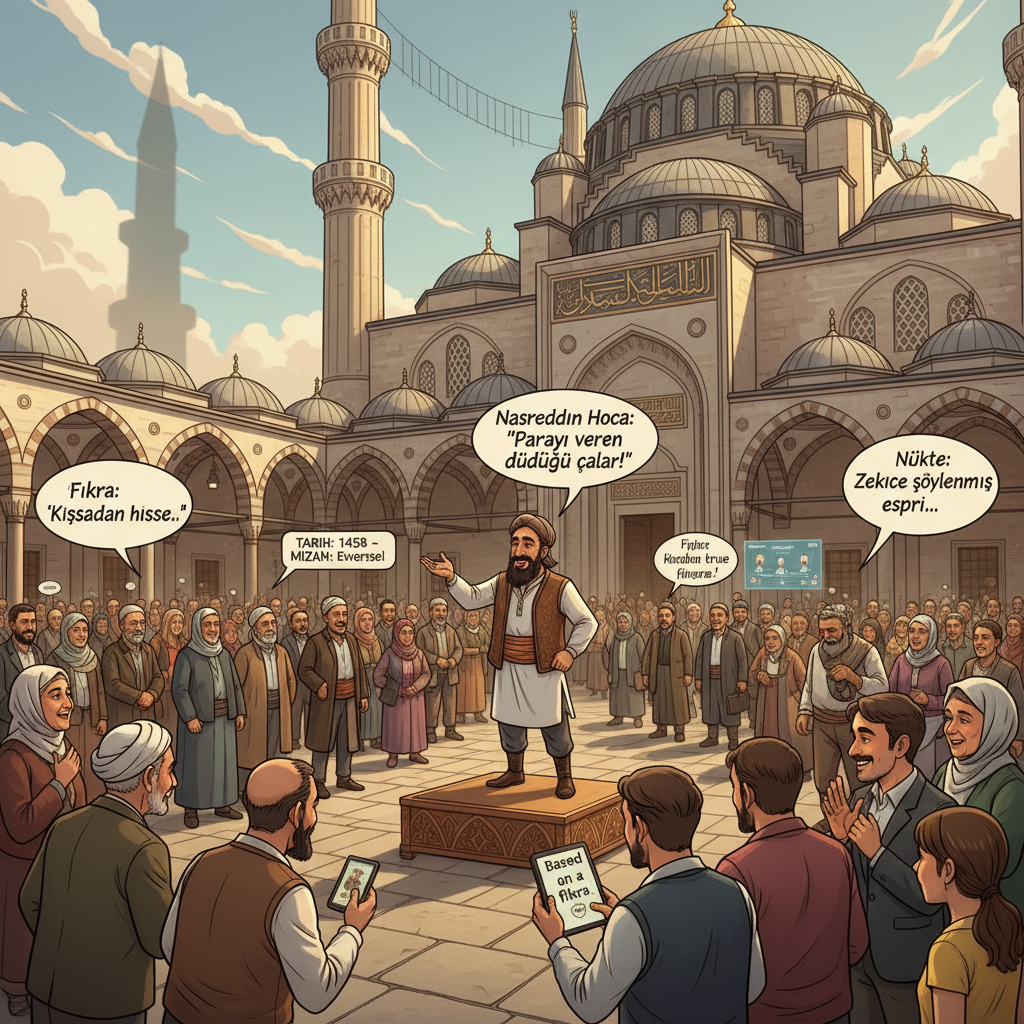
Humor and Critique Rising in the Shadows of Eyüp Sultan Mosque in 2026: The Culture of Anecdotes and Wit from Past to Present
Eyüp Sultan Mosque, a spiritual and historical heart of Istanbul, continues to inspire a rich culture of humor and critique. This article delves into the anecdotes, witty remarks, and social commentary that have flourished around this ancient structure from its origins to 2026, showcasing its enduring cultural significance.
Humor Culture of Eyüp Sultan Mosque: Witty Remarks and Criticism Since 2026
The Eyüp Sultan Mosque, a cornerstone of Istanbul's historical and spiritual identity, has long been more than just a place of worship. Indeed, for centuries, it has served as a vibrant hub of social and cultural life. Even in 2026, this venerable structure continues to offer solace and is a repository of countless stories, anecdotes, and witty remarks. Notably, the Humor Culture of Eyüp Sultan Mosque, intertwined with the mosque's spiritual ambiance, embodies a distinctive critical perspective and a tolerant understanding. For more on the mosque's profound significance, explore its iconographic meanings.
The Emergence of Social Humor at Eyüp Sultan Camii
For generations, the area surrounding Eyüp Sultan Mosque has been a significant gathering place. People from diverse social strata, with varying viewpoints and professions, converged here, especially during the Ottoman period. Consequently, this rich diversity fostered a vibrant oral culture, particularly one focused on humor. The mosque's mystical atmosphere lent a unique dimension to experiences and personalities, contributing to anecdotes that often carried gentle irony or profound criticism. This environment also nurtured a rich merchant culture centered on spirituality. The Humor Culture of Eyüp Sultan Mosque truly began to take shape during these formative years.
Anecdotes and Witty Remarks Around Eyüp Sultan Camii
- Anecdotes shared in the mosque's courtyard, within nearby artisan shops, or during visits to tombs, frequently mirrored the ironies of daily life, societal flaws, and the humorous aspects of human nature.
- While often interwoven with religious themes, these witty remarks profoundly addressed universal human experiences. Furthermore, the Humor Culture of Eyüp Sultan Mosque adopted a style that evoked thought and smiles, rather than harsh condemnation.
- Humor frequently served as a tool for social commentary, delivering veiled messages on various topics, from governance to public concerns.
The Humor Culture of Eyüp Sultan Mosque in Legends and Anecdotes
Numerous legends and anecdotes linked to Eyüp Sultan Mosque have been passed down through generations. These narratives not only entertain but also offer crucial insights into the social structure, values, and beliefs of their respective eras. Humor, whether by exaggerating ordinary events or by infusing meaning with subtle allusions, consistently left a memorable impact on listeners. The spiritual experiences around the mosque also extended to its serene gardens, further enriching the Humor Culture of Eyüp Sultan Mosque.
Witty Remarks Blended with Eyüp Sultan's Miracles
The spiritual essence of Hazrat Eyüp Sultan also permeates the anecdotes that have developed around him. Miracles recounted were sometimes reinterpreted through humorous language. Events surrounding this revered figure were often approached with a humorous perspective, demonstrating a form of "irony of the sacred" without compromising respect. For instance, witty remarks concerning vows made at the tombs or the interesting habits of the mosque congregation form a significant part of the Humor Culture of Eyüp Sultan Mosque. The stories passed down often become family chronicles within the community.
Evolution of the Humor Culture of Eyüp Sultan Mosque: Past to Present (2026)
The understanding of humor has continuously evolved alongside societal changes. From the Ottoman Empire through the Republic, and extending into 2026, humor around Eyüp Sultan Mosque has adapted new forms. Nevertheless, one constant remains: this location has always inspired impromptu and spontaneous witty remarks, contributing to the enduring Humor Culture of Eyüp Sultan Mosque.
19th Century Ottoman Society and Humor
In the 19th-century, Ottoman society cultivated its unique brand of humor in central districts like Eyüp Sultan. Characters from shadow play, such as Karagöz and Hacivat, satirized a broad spectrum of social classes, from rural folk to high-ranking palace officials. Eyüp Sultan, as part of this diverse humor landscape, inspired key humor magazines and folk narratives of the period. The historical roots of the Humor Culture of Eyüp Sultan Mosque are deeply embedded in these traditions. For an academic perspective on Ottoman social history, consider resources like the Ottoman Historian website.
Digital Age Humor and Eyüp Sultan Camii in 2026
As we navigate 2026, humor is no longer confined to oral tradition; it has significantly expanded across digital platforms. Thanks to social media, internet forums, and viral content, humorous shares related to Eyüp Sultan Mosque are common. While these new forms sometimes lack the subtlety and depth of traditional Eyüp Sultan humor culture, they certainly reinforce the venue's place in popular culture. Importantly, respectful and thought-provoking humorous approaches, in harmony with the mosque's spirit, remain highly valued within the evolving Humor Culture of Eyüp Sultan Mosque. You can find more discussions on contemporary humor trends on platforms like Pew Research Center's internet trends.
The Social Function of the Humor Culture of Eyüp Sultan Mosque
Humor serves more than just to elicit laughter; it fulfills a crucial social function. The humor that developed around Eyüp Sultan Mosque has expertly met this purpose. People have used humor to navigate difficulties, ease social tensions, and bridge different viewpoints, all contributing to the rich Humor Culture of Eyüp Sultan Mosque.
Balancing Criticism with Tolerance
- Eyüp Sultan anecdotes frequently contained subtle criticism, yet they also embodied a tolerant outlook. Messages were conveyed implicitly, thereby avoiding offense.
- This balance is one of the most distinguishing characteristics of the Humor Culture of Eyüp Sultan Mosque. Here, humor was employed constructively, not destructively.
- Even when addressing social norms, administrative decisions, or individual behaviors, the tone was consistently gentle and instructive.
Forgotten Witty Remarks and the Future of Eyüp Sultan Humor
Regrettably, modern urbanization and evolving lifestyles currently pose a threat to the centuries-old oral humor tradition surrounding Eyüp Sultan Mosque. However, preserving and transmitting this culture to future generations is vital for the region's cultural identity. Even in 2026, the unique atmosphere of this historic site continues to hold the potential to keep old anecdotes alive, ensuring the continuity of the Humor Culture of Eyüp Sultan Mosque.
Efforts to Revive the Humor Culture of Eyüp Sultan Mosque
Various local cultural associations, dedicated researchers, and even digital platforms are actively striving to document and reinvigorate this rich heritage. Initiatives like short film festivals, storytelling events, or digital archives focusing on Eyüp Sultan can significantly contribute to the enduring survival of this valuable humor culture. Thus, the Humor Culture of Eyüp Sultan Mosque can serve not only as a reflection of the past but also as a profound source of inspiration for the future. Preserving this cultural legacy is as important as understanding the daily life behind the scenes at the mosque.
Sıkça Sorulan Sorular
What is the Eyüp Sultan Camii humor culture?
The Eyüp Sultan Camii humor culture refers to the tradition of anecdotes, witty remarks, and social criticism that has evolved around the Eyüp Sultan Mosque in Istanbul for centuries. It's characterized by a unique blend of spiritual ambiance, critical perspective, and tolerant understanding, often serving as a tool for social commentary even in 2026.
How did social humor emerge around the Eyüp Sultan Camii?
Social humor around the Eyüp Sultan Camii emerged due to the area being a significant gathering place for diverse social strata and viewpoints, particularly during the Ottoman period. This rich diversity fostered a vibrant oral culture where people shared anecdotes that often contained gentle irony or profound criticism, reflecting daily life and societal flaws.
What role does humor play in the Eyüp Sultan Camii culture?
In the Eyüp Sultan Camii culture, humor plays a crucial role as a tool for social commentary. It delivers veiled messages on various topics, from governance to public concerns, and often mirrors the ironies of daily life and human nature. This humor aims to evoke thought and smiles rather than harsh condemnation, embodying a distinctly tolerant approach.
Are the witty remarks around Eyüp Sultan Camii exclusively religious?
No, while often interwoven with religious themes due to the mosque's spiritual significance, the witty remarks around Eyüp Sultan Camii are not exclusively religious. They address universal human experiences and offer profound insights into social structures, values, and beliefs of their respective eras, continuing to be relevant in 2026.